
Like the wiring in other parts of the home, the electrical service in bathrooms must follow the code requirements set forth by your local building inspection office. Over the years, these requirements have become more exacting as the code strives to keep pace with increasing electrical demands in bathrooms.
Most electrical code requirements for homes are based on the NEC (National Electrical Code). The NEC is an official document assembled by a committee of electricians and building professionals and provides minimum safety standards for wiring installations. It is revised every three years (2014, 2017, 2020, etc.), and although the changes enacted in new editions are usually minor, always check the latest edition of the NEC when planning a bathroom.
Remember that your local code always supersedes the NEC. While most local codes are based on the NEC, this is not always the case. Local codes may have more relaxed requirements than the NEC, or in rare instances, they may have more exacting standards.
Some homeowners are startled to learn that their existing bathroom wiring does not meet the current code requirements. This usually is no cause for worry. The latest code provides requirements for new construction or major remodeling jobs where the bathroom footprint is being expanded. Existing bathrooms in older homes will rarely meet all these requirements, and homeowners are usually allowed to do routine repairs and remodeling without bringing the entire bathroom "up to code." For example, in an older bathroom served by a single electrical circuit, you are usually allowed to replace light fixtures or outlet receptacles without going as far as adding the additional circuits required for new construction.
When a professional electrician performs work on your bathroom, he or she will be aware of what types of code upgrades are mandatory, and when existing wiring configurations can remain as they are. If you are doing the wiring yourself, consult your local building inspection office for advice.
Anytime you are remodeling, keep an eye on the current code requirements for new construction. Where possible, bringing your bathroom fully up to code will make it safer and more appealing to future buyers.
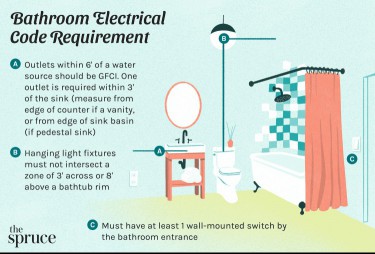
The Spruce / Joules Garcia
Number of Circuits
Although a bathroom may seem like a small space that might effectively be served by a circuit extension off an adjoining room, the NEC now requires at least two dedicated circuits for each bathroom:
- A 20-amp receptacle circuit for plug-in appliances. All receptacles must be AFCI and GFCI-protected, either by circuit breakers or individual receptacles that offer AFCI and GFCI protection.
- Light fixtures and wall switches must be on a separate circuit. A 15-amp circuit is the minimum, but this is often a 20-amp circuit, especially if there is a heat lamp integrated into this circuit. This circuit may power the vent fan.
- A separate circuit is required for a whirlpool tub or any other large fixture or appliance in the bathroom.
While the NEC suggests that bathroom circuits must be dedicated to the bathroom and not serve other rooms, your local jurisdiction may allow it, so it's best to check with the local building inspection office.
Bathroom Lighting
The NEC requires at least one permanently mounted light fixture in a bathroom. This can be a ceiling light, a combination vent fan/light fixture unit, or a vanity area light.
Most bathrooms, however, add at least one other light fixture, often a wall-mounted vanity light above the mirror or a pair of wall sconces on the sides of the mirror. Lighting is a prominent need in bathrooms, and it is common to have three different lighting sources: a ceiling fixture, vanity lighting, and a third light in the shower or integrated with a vent fan. If you add a light to the shower stall, don't forget the required protective waterproof lens.

Exhaust Fan
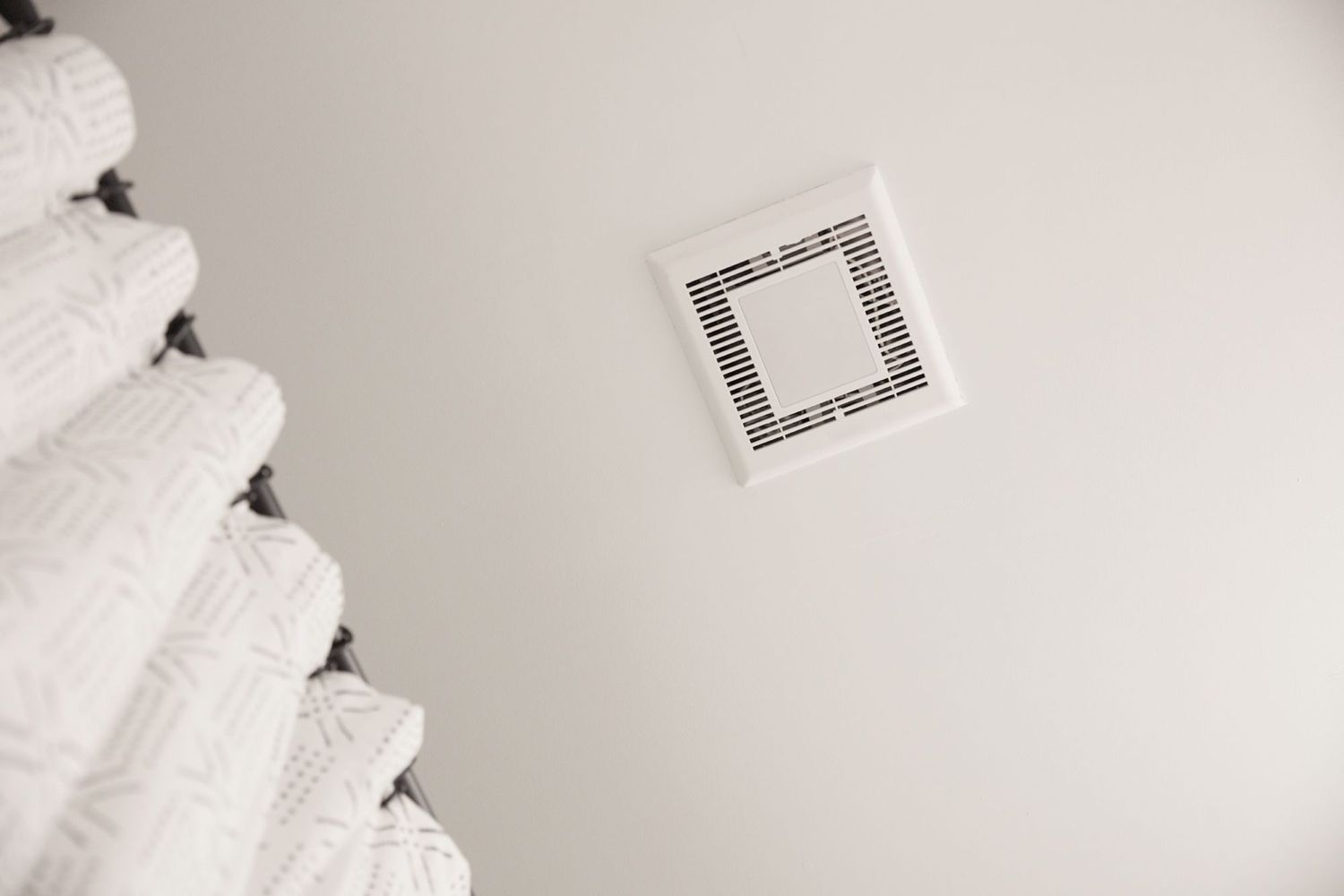
Most communities require bathrooms to have either a window that can be opened or an electric vent fan that will exhaust moisture from the bathroom to the outdoors. Some communities may require a vent fan even if there is a window in the bathroom. A vent fan certainly is a good idea, whatever the requirements are since venting moist air is the single best way to prevent mold and mildew from growing in your bathroom.
A bathroom vent fan must be powerful enough to remove and displace moisture from the room outdoors. Vent fans are measured in CFM (cubic feet per minute). Check with your local retailer to purchase a fan unit with a CFM capacity that meets your bathroom's square footage.
Some local codes allow you to control the fan by itself, while others require that the fan come on with lighting. Combination and all-in-one fixtures integrate lighting, the vent fan, and a heat lamp or blower-heater. Depending on the amperage draw of the unit, this fixture may require a dedicated circuit.
The Spruce / Margot Cavin
Outlet Receptacles
When considering bathroom receptacles, keep the correct placement in mind:
- Keep the receptacle outside a zone measuring 3 feet horizontally and 8 feet vertically from the top of the bathtub or shower threshold.
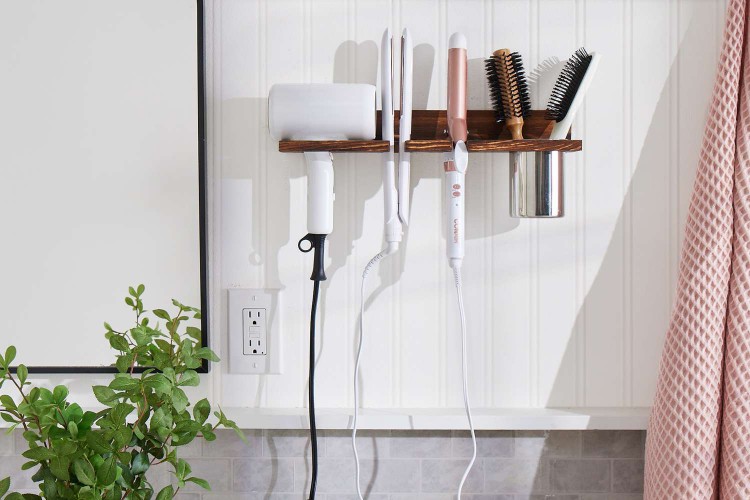
- It should be at least 1 foot from the sink but no more than 3 feet.
- Avoid positioning a receptacle over the center of the sink, where cords from hairdryers and electric shavers might hang down into the basin.
- Receptacles are best positioned a foot or so to the left or right of sink basins.
Depending on the size and depth of your bathroom, you may want to add a general outlet near the door to plug in a vacuum cleaner. If you have a makeup table incorporated into the bathroom plan, that's a great place for an outlet.
The Spruce / Jacob Fox
Recommended Articles

7 Ways to Open a Paint Can Like a Professional—and Not Spill a Drop
Painting is a DIY-friendly task, but if you’re a beginner, you might be stumped over how to even open the airtight lid on a paint can. Opening a paint can isn’t as easy as popping open a can of soda,
10 Reasons Why Paint Is Bubbling on Your Walls and How to Fix It Like a Pro Fast
Paint bubbling on the wall can drag down your home’s look, making it look dingy and dirty. While bubbling paint is frustrating on a wall that hasn’t been painted in a while, it’s especially maddening

5 Common Decor Mistakes That Can Make Your Home Feel Less Inviting, According to Designers
Key Points Lacking a clear entryway drop zone or not layering in enough textures can make a home feel cold and unwelcoming.Poor lighting can ruin the atmosphere of a space, so aim to layer different l
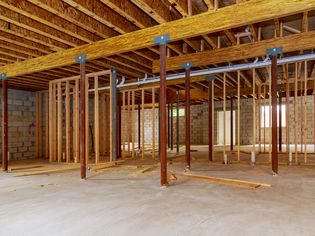
What Is a Lally Column: Everything You Need to Know
When a home has structural issues such as sagging floors, you might immediately worry about huge repair bills, which is understandable given the vital nature of your foundation. But in some cases, ins
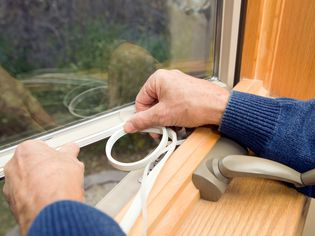
Winterizing Your House Now Can Save You Money Later—What Pros Want You to Know
The process of preparing your home for winter is known as winterizing, though the exact steps a homeowner needs to take to winterize their home varies. Basic winterizing tasks can be as simple as drai

Electrical Code Requirements for Bathrooms
Like the wiring in other parts of the home, the electrical service in bathrooms must follow the code requirements set forth by your local building inspection office. Over the years, these requirements

8 Ways to Update Oak Kitchen Cabinets Without Breaking the Bank
Modernizing dated oak cabinets doesn't require replacing them. You can upgrade your space on a budget with a simple DIY refresh—from swapping out hardware to a coat of paint, a new stain, or altering
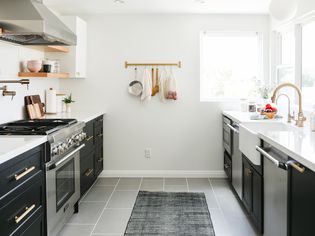
These 8 Hacks Can Help You Fake a Kitchen Reno
When it comes to renovating your home, nothing makes more of a difference than a brand new kitchen—and nothing is quite as demanding on the budget either. If a new kitchen just isn't quite in the card