Heavy rain and melting snow can lead to water accumulating in the yard, where it forms puddles and creates large areas of mud and standing water. When water cannot drain away from the yard, it may flow towards the home, resulting in flooding and water damage.
To help protect the foundation of the home from ongoing damage and to prevent flooding, a French drain can be installed to redirect the flow of water away from the home. By drawing water in from the saturated ground, the French drain system also reduces standing water in the yard.
What Is a French Drain?
A French drain is a simple trench dug in the ground in the most problematic areas of the yard. The trench is filled with a perforated pipe wrapped in water-permeable fabric, and the pipe is covered with several layers of stone or gravel.
French drain systems work because gravity causes the water to flow downhill, and water will always follow the path of least resistance, so it is naturally drawn down through the stones into the hollow pipe where the water can flow freely on a downward slope towards a municipal drain, a rain barrel, or any other suitable location for water drainage.
The History of French Drain Systems
The French drain was detailed in an 1859 book written by Henry French, a judge and farmer who lived in Concord, Massachusetts. He helped to popularize the idea specifically to drain excess water away from crop fields to improve crop yield and prevent flooding. The system was named for Henry French and has been used since his time to improve crop field drainage, reduce yard saturation, and help protect housing foundations.
It's a basic design that takes advantage of scientific laws to quickly and effectively drain excess water away from a given location. Gravity acts on the water to draw it down into the soil, but the water will always take the path of least resistance, and it will flow through the hollow, perforated pipe under several layers of stone or gravel.
For instance, during a heavy rainstorm, water can accumulate around the foundation of the home and eventually seep into the basement because it doesn't have a drainage path. However, installing a French drain around the foundation helps to pull water away from the home and into the hollow drainage pipe, making use of water's tendency to follow the path of least resistance.
Campwillowlake / Getty Images
How French Drains Work
A French drain provides the path of least resistance for water to follow instead of building up and flooding the soil. It uses a hollow, perforated drainage pipe to collect and carry the water from the yard to a designated drainage location, like a municipal wastewater drain or a rain bucket. The drainage pipe is wrapped in water-permeable fabric to prevent weeds, dirt, and other debris from obstructing the perforations in the pipe.
Additionally, the pipe is covered in several layers of stones or gravel. By replacing soil with stones or gravel, you help the water flow down into the drainage pipe because it's much easier for water to move through the larger gaps provided by packed stone than it is for the water to flow through densely packed soil.
Each aspect of a French drain is designed to make it easier for the water to move down from the surface, through the stones, through the unobstructed perforations, into the hollow drainage pipe. The drainage pipe should be set at an angle so that when the water enters the pipe it immediately begins flowing away from the home to prevent water build-up and flooding.
Just keep in mind that if you do not use a water-permeable fabric to wrap the drainage pipe, the water cannot enter the drainage pipe, so the flooding issues will continue. Every material used in the installation needs to improve the flow of the water, otherwise, the French drain becomes ineffective.
When to Use French Drain Systems
Before deciding to start trenching the yard, it's important to understand when a French drain system is beneficial and how it can help to improve common problems caused by heavy rain, excess groundwater, and melting ice or snow.
Recurring Flooding and Foundation Damage
A weeping tile or interior French drain can be used to protect the basement from recurring floods and to prevent further damage to the foundation. Weeping tiles are a type of exterior French drain that can be installed around the perimeter of the home to draw water away from the foundation. This reduces the hydrostatic pressure on the foundation, giving the water an alternate path to follow instead of being forced through cracks in the foundation wall.
What Is Weeping Tile?
Weeping tile is a term that is often used when discussing French drain systems. This is because weeping tile is a type of French drain that is specifically used to protect a structure against hydrostatic pressure. This means that weeping tile is typically installed at a deeper point than a standard French drain to prevent flooding and damage to the foundation of the home.
However, if the water is already seeping through the foundation and into the home, it may be better to invest in an interior French drain. These systems typically consist of a drainage board that sits between the foundation wall and the interior wall of the home. The drainage board collects any water that seeps through cracks in the foundation and redirects it to a French drain buried under the concrete floor of the home.
Pooling Surface Water
One of the most common uses of a French drain is to draw in water that has formed puddles or large pools on the surface. The drain pulls in water from the saturated soil by providing an easy path for the water to follow. It's then redirected to a more suitable drainage location, like a municipal wastewater drain. You can also direct the water to a catch basin, like a rain barrel, so the collected water can be used during the warmer months of the year to water the garden or lawn.
Retaining Walls Under Pressure
Retaining walls help to hold soil in place and prevent erosion, but when the soil becomes overly saturated, this can exert increased pressure on the retaining walls, causing them to fail. Installing a French drain to help draw in excess water and redirect the flow away from the retaining wall is a great way to help protect the integrity of the structure during heavy rainfall.
Cost of Installing a French Drain
Another factor to keep in mind before installing a French drain is the cost of materials, as well as any costs associated with hiring a professional to complete this work. While this task can be handled by an experienced DIYer, many people may prefer to have the system professionally installed to ensure that it will work effectively. Additionally, hiring a professional can give you better peace of mind because most companies will guarantee their work, so if there are any problems with the French drain or if any other electrical or plumbing lines are damaged during the installation, you can contact the company to resolve the issue.
The average cost to have a French drain professionally installed is about $5,000, though it can climb to $18,000 for an interior French drain installation. Keep in mind that the longer the drainage trench, the higher the cost of materials. In general, you can expect to pay about $10 to $50 per linear foot for an exterior French drain and about $40 to $100 per linear foot for an interior French drain due to the specialized membranes and additional work required to install this type of system.
Installing a French Drain
You can install a French drain in your own yard as a DIY project. There is physical labor involved, though the steps are straightforward for those with basic DIY skills.
- Decide on the best spot for the French drain to direct water away from your home.
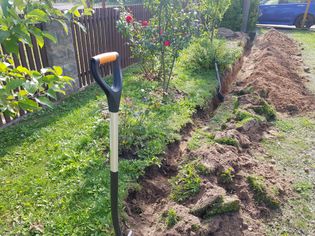
- Dig a trench that is approximately 18 inches deep and 12 inches wide. Make sure it has a slight slope so gravity will drain the water properly.
- Line the trench with a weed barrier or another fabric that will prevent weeds from growing through the trench.
- Fill the bottom of the trench with gravel.
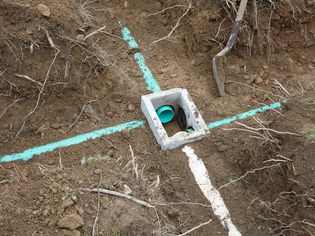
- Install a grate in the spot where you are directing the water away, then connect the pipe throughout the trench.
- Cover the pipe with gravel and fill the trench with topsoil.
- Finish the project either by using landscaping gravel on top or planting grass on top.
- Perform annual maintenance to make sure the drain is flowing successfully.
- What is the purpose of a French drain?
The purpose of a French drain is to direct water away from a home, building, or an area where it typically puddles.
When should you not install a French drain?If you do not live in an area with heavy rain, you do not have to install a French drain. Also, if you do not have the ability to slope the drain then a French drain should not be installed.
Where does a French drain empty water to?A French drain will direct the water away from the house towards the street, sidewalk, or a public drain.
Is it worth putting a French drain in?Absolutely! If heavy rain is puddling around your home, putting a French drain in will prevent damage to your property, including the foundation.
Recommended Articles
 PAINTING
How Is Paint Made?
When you pull out the roller or the brush and start painting your home, the paint's ingredients and how it is made are likely the least of your concerns. Visions of your soon-to-be beautiful living ro
PAINTINGSatin Paint vs. Matte Paint: What's the Difference?
Choosing satin paint vs. matte paint will yield very different results, but what is it that differentiates these two popular paint sheens? Even the exact same paint color can take on totally different
HOME-DESIGN-STYLES5 Designer-Approved Ways to Turn Your Home Into a Minimalist Farmhouse
Although there's no denying that the neutral colors and cool, clean lines of Scandinavian and minimalist interiors are soothing to the eye, there's also something undeniably comforting about the farmh
HOME-IMPROVEMENTElectrical Code Requirements by Room
The National Electrical Code (or NEC) is a document put in place to protect homeowners and residents from the dangers and risks posed by working with electrical connections. These residential electric
HOME-IMPROVEMENTLearn the Rules for Overhead Clearance on Power Lines
Overhead power lines are subject to strict guidelines for minimum height clearances over streets, sidewalks, alleys, driveways, and other traffic areas. This is a safety consideration, aimed at keepin
EXTERIOR-REMODEL-AND-REPAIRWhat Are Leach Lines, and When Should They Be Replaced?
If your home has a septic system, it has leach lines or a leach field. An essential component of all onsite wastewater systems, leach lines are the last step in a process that starts at your sink or t
BATHROOM-REMODEL-AND-REPAIRHow to Maintain Privacy When There’s a Window in the Shower
A window in a bathroom brings welcome natural light and fresh air—and it can also bring unwelcome attention from the outside, particularly when that window is in the shower. With most windows, you sim
KITCHEN-REMODEL-AND-REPAIRNeed to Call a Plumber ASAP? Here's How Much It Will Cost Per Project
Plumbing is often best left in the hands of a qualified, licensed plumber. Plumbers generally charge $105 per hour, and the average plumbing repair costs a flat rate of $325. Find out how much a plumb