
Key Points
- Use wide-beam recessed downlights, but don’t make them your only light source.
- Layer with pendants, sconces, and under-cabinet lighting for full coverage.
- Stick to 2700K–3000K bulbs and avoid overlighting the space.
In small kitchens, it's all about making the most out of what you've got. Strategically placed light sources make a huge difference in terms of functionality, because a little extra illumination in just the right spots will open up new spaces for chopping vegetables or mixing cookie batter. Additionally, a small but properly lit kitchen can feel less cramped than a larger, dim kitchen.
We turned to two designers to learn some of their trade secrets for choosing a lighting setup for a small kitchen, and here are their thoughts.
Meet the Expert
- Debbie Bernstein is Tirschwell Lighting Design's West Coast designer who specializes in lighting design for luxury homes, lofts, and apartments.
- Courtney Batten is the founder and lead interior designer at Paige Studio. She specializes in renovations and custom new builds. She's overseen kitchen lighting design on countless projects.
The Best Kind of Lighting For Small Kitchens
Love them or hate them, lighting designer Debbie Bernstein says recessed downlights (commonly referred to as can lights) with a wide beam spread are one of the best lighting choices for a small kitchen.
"They provide clean, unobtrusive general lighting without cluttering the ceiling or interrupting sightlines—key factors in making a tight space feel open," Bernstein says. "When evenly spaced and dimmable, they balance function and mood, helping the space feel both bigger and more versatile."
Can lights can sometimes get a bad rep for looking too builder-grade, but there's no denying they are incredibly functional. Designer Courtney Batten tends to avoid can lights in her projects, but when a space calls for them (like in a small kitchen), she says layering lighting is key.
"Relying on can lights alone will make your kitchen feel harsh and flat," she says. "Layered lighting adds the depth and warmth that will make your kitchen feel more intentional."
Luckily, there are plenty of other options for kitchen lighting that complement can lights.
Want more design inspiration? Sign up for our free daily newsletter for the latest decor ideas, designer tips, and more!
5 Other Kinds of Lighting You Can Use
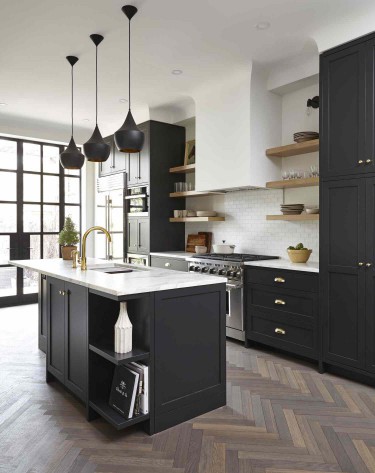
Charlie Interior Design
To give your small kitchen a more refined look, both Bernstein and Batten agree that you shouldn't rely solely on just one light source. Here are a few additional artificial light sources they recommend:
- Under-cabinet lighting: Batten considers under-cabinet lighting to be a must-have in every kitchen she designs, but especially small ones. This type of task lighting minimizes shadows on counters, which are some of the most important surfaces in a kitchen.
- Lighting Over the Sink: "I always add a pretty wall sconce or pendant over the sink because it not only adds visual interest but also much-needed soft task lighting for washing dishes after dinner," Batten says.
- Kitchen Island Lighting: If your small kitchen is just big enough for an island, pendant lights will light up this workspace perfectly. Bernstein suggests using versions with transparent or open shades in a small kitchen to avoid visual clutter.
- Toe-Kick or Cabinet Base Lighting: "This low-level accent lighting adds a soft glow and creates the illusion of floating cabinets," Bernstein says. "It’s subtle but helps open the room visually, especially at night."
- Central Ceiling Fixture: If you're making the decision to forgo can lights, one large central ceiling fixture is a great ambient lighting alternative.
How to Apply Lighting Strategies in a Small Kitchen

Desiree Burns Interiors
Aside from layering your kitchen lighting, there are some other strategies that can open up a small kitchen and make it feel more comfortable.
For starters, keep a consistent color temperature throughout each fixture in your kitchen. Batten recommends sticking to either 2700K (warm) or 3000K (neutral-white) throughout the kitchen.
"Mixing color temperatures is one of the most consistent mistakes I see when walking into homes," Batten says. "It creates visual dissonance and can make small spaces feel smaller and a bit jarring."
Lastly, avoid falling prey to over-lighting your kitchen.
"Yes, there can be too many task lights," Bernstein says. "Over-saturating a small kitchen with tightly spaced or overly bright lights can create glare and reduce comfort. Aim for well-placed fixtures based on zones of activity, not just symmetry.
Recommended Articles

How to Pick Out a Paint Sprayer
If you have ever painted a house and used a roller or paintbrush, you know it's a long, tedious job, seemingly with no end in sight, especially if you have to do more than one coat. Enter the paint sp
Is Farmhouse Design Still In Style? What Designers Really Think
Is farmhouse style still trending, or is it time for a fresh look? It's been over a decade since farmhouse style became all the rage, so we asked a couple of designers to weigh in on the matter if the

How to Renovate with Sustainability in Mind
Home renovations can always be stressful, but renovating and decorating your home in an eco-friendly way can feel extra overwhelming if you’re not sure where to start. The good news is that there have
7 Home DIY Projects You Can Do for Less Than $100—But Make a Big Difference
There are a number of budget-friendly home upgrades you can make for an instant refresh.Replacing kitchen faucets, cabinet hardware, electrical switches, and lighting all go a long way.Painting, insta

8 Things to Do Right Now to Get Your Deck Ready for Cold Weather
When the weather is beautiful, a well-cared-for deck is one of the best ways to enjoy it. However, when the temps take a downward turn, it's crucial to take some time to prepare your deck for the wint

8 Popular DIY Projects That Can Decrease Your Home's Value, a Real Estate Agent Says
Tackling DIY home improvement projects can make your home look better, be more functional, and can even increase the value of the home, making it a better investment for when you eventually sell. Howe
Comprehensive Guide to Remodeling a Small Bathroom
Homeowners often imagine that remodeling a small bathroom—about 50 square feet or less—will be much quicker, easier, and less expensive than remodeling a large bathroom. The reality is you may not sha
Everything You Need to Know About Installing a Basement Bathroom
A basement bathroom is a great way to use the entire home efficiently. It can appeal to a homeowner who plans to continue living in the house and it is also attractive to a prospective buyer, typicall