When a home has structural issues such as sagging floors, you might immediately worry about huge repair bills, which is understandable given the vital nature of your foundation. But in some cases, installing a set of lally columns can be a relatively easy fix in crawl spaces or basements for minor foundation problems.
Below, we've defined lally columns, various types to choose from, and how to install them safely.
What Is a Lally Column?
A lally column is a steel column used to temporarily or permanently support an unsupported joist or beam. The oldest form of a lally column is a non-adjustable steel column cut down to size and filled with concrete to improve its structural strength and stability.
However, the term has come to encompass many other iterations of mobile steel columns, such as the following:
- Adjustable steel columns
- Teleposts
- Jack posts
Modern mobile steel columns consist of two telescoping steel tubes, one inside the other, that adjust upward or downward and lock in place.
Typical Lally Column Projects
Here are some instances in which a lally column would be necessary:
- When a builder or home remodeling contractor removes an interior, load-bearing wall, they will insert a series of lally columns in place of the removed wall to keep the house structurally sound. These posts will later be removed when the wall is rebuilt or another type of bracing is installed (such as a beam).
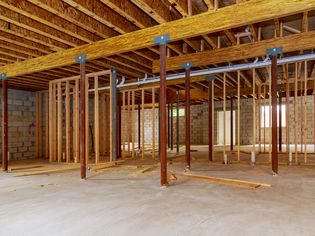
- Short jack posts are often installed in out-of-the-way places like crawlspaces and basements to correct sagging floors.
- Temporary projects that need quick shoring up and easy removal.
Permanent vs. Temporary Lally Columns
Lally columns can be temporary or permanent. The scope of your project and structural needs will determine which one is necessary. When in doubt, consult a structural engineer for guidance on choosing a temporary or permanent column.
Here are different uses for temporary vs. permanent lally columns:
When to Use Temporary Lally Columns
Use temporary lally columns to hold up heavy structural weight when performing certain repairs, such as major wall remodels or installing new windows or doors.
Brace the joists of the floors with temporary columns when removing a load-bearing wall. The temporary lally column can be removed once the framing is appropriately strengthened to compensate for the modifications.
When to Use Permanent Lally Columns
Local building codes often allow adjustable or non-adjustable lally columns to remain permanently in place. Permanent lally columns are sometimes installed to correct structural problems.
For instance, permanent columns are sometimes used under a house, in the crawlspace or basement, to shore up the structure. When installing a permanent lally column, the column must be able to meet the long-term structural needs of the project.
Adjustable vs. Non-Adjustable Lally Columns
Lally columns are available in both adjustable and non-adjustable iterations, each with its benefits.
Adjustable Lally Columns
Adjustable lally columns are easy to slide in place and adjust to fit the space. Adjustable columns typically range from about 3 feet to 14 feet tall. The shorter the column, the greater the weight it will support.
For example, a 6-foot long, 4-inch diameter column has a maximum weight rating of up to 21,300 pounds. Increasing the length of the column can drop its weight rating to 10,200 pounds.
Non-Adjustable Lally Columns
Non-adjustable steel columns require more prep work, as they must be cut to fit within a given space.
Typically, these columns are 4 inches in diameter and constructed with 11-gauge steel, though smaller columns are sometimes available. When used in a finished basement, these columns can be boxed in with wood and drywall or left exposed.
Before You Begin
Installing an adjustable steel lally column may seem straightforward, but essential steps will ensure the strength and stability of the column to protect your home's structural integrity.
When purchasing columns, use the steps below to choose the proper length. Make sure the column is strong enough to support the load even when fully extended.
If you have any doubts about the intended placement or the required strength of the lally column, consult a structural engineer before installation.
Safety Considerations
Lally columns can become dangerous when installed improperly. Stay safe when installing and operating around lally columns by keeping these safety considerations in mind:
- Most lally columns are not to be used for the initial jacking-up operation. A hydraulic or screw house jack should be used for elevation and then the steel lally column is inserted. After the column is in place, it can be used to make minute adjustments in elevation with the screw jack portion.
- Columns' weight ratings depend on them being mounted perfectly vertically. When a column is even a little out of plumb, you are at serious risk of injury or death, as the weight from above can force the column to shoot out. Use a level to ensure that the column is perfectly plumb (vertical), then make certain that it's resting on a perfectly level surface.
- Steel plates at the top and bottom of each steel column are necessary to prevent the cylindrical ends of the columns from biting into the wood.
How to Install a Lally Column
These installation instructions assume that you will be setting up an adjustable steel lally column on a solid concrete floor footing and under a solid load-carrying beam such as a laminated veneer lumber (LVL) beam.
-
Measure the Space and Choose a Column
Measure the vertical distance to be spanned by the column. Within each class of lally column, there is an adjustment range for the machine screw assembly, which is typically 4 inches. For example, if you need to support a beam that is 8 feet tall, purchase a lally column that spans from 7 feet by 9 inches up to 8 feet by 1 inch.
Warning
Even though a lally column can be adjusted, you should minimize the elevation of the screw portion as much as possible, as this adversely affects its strength.
-
Establish the Upper Plate Placement
Establish the included metal plate on the underside of the LVL beam. Follow these steps:
- Place the metal plate on the beam and mark the holes for the bolts.
- Pre-drill holes in the LVL beam for the included bolts.
- Mount the metal plate with the included bolts.
- Now that you have established the location of the metal plate, detach it.
-
Attach Plates to Lally Column
Attach the metal plates to the top and bottom of the lally column.
-
Adjust the Lally Column
Turn the machine screw on the column until the length of the column including the metal plates is 1/2 inch shorter than the distance between the column and the floor.
-
Move Column Into Place
Slide the column into place using your marks on the LVL beam as your guide, then attach the plate once more using the provided bolts.
-
Tighten the Lally Column
Turn the screw until the lally column becomes tight against the floor. The goal is to snug the column into place but not to jack up the beam.
-
Check for Plumb
Use a level to ensure the lally column is perfectly plumb. Adjust it if necessary.
-
Fasten the Bottom Plate to the Floor
Fasten the bottom metal plate to the floor. If it's necessary to drill holes when fastening the bottom metal plate to concrete, it may be helpful to uninstall the lally column after determining the proper positioning.
-
Remove the Lever
If the adjustment mechanism's lever is removable, slide it out of place and keep it in a safe spot. Keep the lever on hand, though, in case future adjustments are necessary.
How to Maintain Lally Columns After Installation
In many cases, permanent lally columns need no maintenance after installation. However, depending on the cause of the home's sagging and settling, it may continue even after the lally column is installed. For instance, a foundation or footing could slightly settle, requiring an extended lally column.
When extending an already-installed lally column, be careful not to over-tighten it. Doing so can damage the home, such as cracking tiles and materials, and pose safety risks. Instead, tighten it in minute increments, just enough to make up the difference needed to correct the sag.
If major settling has occurred after installing a lally column, consult a structural engineer to uncover the proper course of action.
- Why is it called a lally column?
Often erroneously referred to as a "lolly column," a lally column, or post, was invented in the late 1800s by John Lally in Waltham, Massachusetts, as a fireproof, insect-proof means of supporting a building at its very lowest points. It was intended to be filled with concrete and installed for permanent structural support for loads up to 44,600 pounds.
Is a lally column and a jack post the same thing?No, a lally column and jack post are not the same thing, though they are both used for structural support in a house. A lally column is permanent and a jack pot is temporary.
Are lally columns always filled with concrete?No, not all lally columns are filled with concrete. Typically, a lally column is filled with concrete for support and to prevent buckling. Some lally columns are not filled with concrete and are left hollow so they can be adjusted for length.
Recommended Articles
 SMALL-SPACES
7 Editors on How They Made Their First Apartments Feel Like Home
This story is part of Home School, our complete guide to making your first home your own, where we share our first-hand and expert advice on everything you need to know to make your first home your be
ROOM-DESIGN-AND-DECORATINGIf You're Still Doing This in Your Kitchen, Designers Say It Will Always Look Cluttered
Key Points Keep counters clear by only displaying essential appliances for a clean, minimalist look.Use smart storage like appliance garages, hidden outlets, and bar carts to reduce clutter.Declutter
INTERIOR-REMODEL-AND-REPAIRBuilding and Design Specifications for a Laundry Room
A laundry room should be one of the most functional and workable rooms in your home. Ideally, the area should have plenty of natural or artificial light, counter space to sort and fold clothes, secure
INTERIOR-REMODEL-AND-REPAIR4 “Dream” Home Upgrades You Can Fake Right Now, According to Avid DIY-ers
This story is a part of our Old House New Issue, where we explore why people are no longer moving in 2024, and how to renovate your current home to make it work for you. To learn more about where to s
HOME-IMPROVEMENTLaminate Underlayment: Installation Basics
Underlayment is necessary for laminate floors because it smooths uneven surfaces, absorbs sound, and controls moisture. Learn about underlayment for laminate flooring and installation basics. What Is
BATHROOM-REMODEL-AND-REPAIRHow to Choose the Right Shower Light
Showers tend to be dimly lit spaces. General bathroom lighting is usually adequate for minimal shower needs, but adding shower lights can immensely brighten the shower and let you see exactly what you
KITCHEN-REMODEL-AND-REPAIRHow Much Does It Cost to Paint Kitchen Cabinets? A Complete Guide
Painting kitchen cabinets can be a cost-effective way to refresh your kitchen when the cabinets show signs of wear, such as fading or chipping. Rather than replacing the kitchen cabinets, which can be
KITCHEN-REMODEL-AND-REPAIRThinking of Buying a New Dishwasher? This Is How Much Installation Will Cost
Installing a new dishwasher is a kitchen upgrade that can be completed in a couple of hours. If the hookups are in place, you may even be able to do the project yourself. Dishwasher installation costs