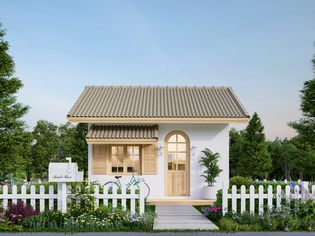
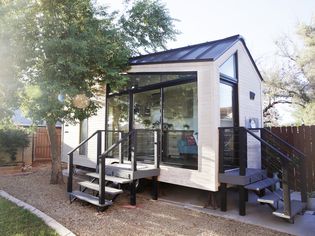
Turning a shed into a tiny house expands living or creative spaces, opens up short-term rental income opportunities, or provides a place for family members to stay. Learn how to turn a shed into a tiny house, as well as its feasibility given your budget and local ordinances.
What Is a Tiny House?
A tiny house is a detached house, usually 400 square feet or less, often located on the same property as a larger home. A tiny house is a type of structure called a detached accessory dwelling unit (DADU).
Type of Shed to Use for a Tiny House
Building out a shed can be a faster, less expensive route to completing a tiny house than starting from scratch. You can use an existing shed if it's on a solid shed foundation, the framework is in good shape, and the shed is sized for your needs.
Not all existing outdoor storage sheds are good candidates for tiny houses. Sheds in use for years likely aren't appropriate, unless they have been kept in perfect condition. So, building a new shed is a more reliable, though expensive, way to create the framework for a tiny house.
Hiring a Contractor vs. DIY
Hiring a Contractor
Advise on DADU permissibility
Navigate permitting process
Relieve burden of planning
Contractor fee
Less flexible timeline
Must use contractor's subcontractors
Hiring a contractor to turn a shed into a tiny house may seem contrary to the DIY, cost-saving nature of the project. But a strong case can be made for hiring a qualified contractor who has built DADUs, particularly one who has converted sheds into tiny houses.
A qualified contractor can advise you on municipal permissions, requirements, zoning, and permits. The contractor takes all of the work of planning and scheduling off of your shoulders.
Though it's common for municipalities to allow homeowners to do electrical and plumbing work on their own houses, it's often different with tiny houses. Plumbing may need to be installed by a licensed residential or commercial plumber and all electrical work may need to be performed by licensed electrical contractors or licensed electricians.
Zoning, Code, and Ordinances
Before starting a shed conversion into a tiny house, the first consideration is whether local ordinances even allow tiny homes to be built and, if so, how easy or difficult it is to turn the shed into a house.
Begin with your city's building and planning department. Some communities are friendly to ADU development, making special efforts to cut the red tape and meet the needs of ADU tiny home builders.
Permits
To turn a shed into a tiny house, you may be required to apply for several permits:
- Building permit: Permit that describes the comprehensive nature of the shed conversion project
- Mechanical permit: Furnaces, A/Cs, fireplaces, clothes dryer exhausts, and similar items
- Electrical permit: Lighting, outlets, and all other grid-based or independent electricity
- Plumbing permit: Water for sinks, showers, toilets, and bathtubs
Inspections
Inspections are a component of most permits. Applying for permits is the first step; permit approvals are the last step. Between application and approval are several inspections by municipal inspectors, such as this three-step sequence just for electrical permits:
- Cover inspection: The inspector visits the tiny house and inspects all wired circuits, with boxes installed, wires run through framing, grounding conductor established, and nail plates in place.
- Service/feeder inspection: The inspector views the electrical service mast, meter base, electrical service panel, grounding conductor, and branch circuits.
- Final inspection: The inspector views the electrical system for the last time to inspect covered panel boxes, circuits established and labeled, and cover plates, as well as relevant electrical appliances (like stoves) hooked up and grounded.
Electricity
Electricity transforms the converted shed into a comfortable, habitable living space. Even if the shed currently has electricity, substantial changes will likely be required.
Power can be brought over from the main house with buried cables or above-ground conduit. The shed should have its own electric service panel and electric circuits independent of the main house. In some cases, a common electric service panel may be approved. If so, both the converted shed and the main house must have direct access to it.
Water and Sewer
Add water and sewer to the tiny house by hooking into the property's existing municipal water and sewer system. Check with the local planning and building department to see if this is allowed and if your system has the capacity to handle the extra demand.
Installing a composting toilet eliminates the steep cost of water and sewer installations. But not all areas permit the use of composting toilets, so check in advance with your environmental or health department and consult local building codes.
Heating and Cooling
Heat and cool your converted tiny home with passive methods: solar gain through windows for heating and airflow, open gables, and reflective paint for cooling.
For active heating and cooling, install a ductless mini-split system. Mini splits provide both heating and cooling. Pellet stoves, baseboard heaters, and radiant floor heating are other tiny home heating options. Window air conditioners and ceiling fans are effective options for cooling tiny homes.
Parking Requirements
Off-street parking provisions are sometimes required when developing DADUs such as converted sheds. Communities friendly to DADUs sometimes pare down or eliminate this requirement altogether.
Going Off the Grid With a Tiny House
One appeal of tiny houses is the chance to seek privacy and serenity outside of the city. Unhooking from the grid—municipal electricity, sewer, and other utilities—is often the trade-off. You can turn a shed into an off-grid tiny house with a few modifications to its utilities.
Power
Solar power has more uses than ever—heating water, powering fans, or heating the tiny home. Situate the tiny house so that roof-mounted solar panels gain the most light throughout the day. The best solar panels for tiny houses will be sized to fit the limited roof area of tiny houses.
Home generators offer reliable power for whenever you need it, at the cost of noise and consumption of fuels that cause greenhouse gasses.
Water
Bringing in water in containers or digging a well are two ways to supply water to an off-grid tiny house. Greywater systems that recycle water from the kitchen and bath stretch out your off-grid water supplies.
Sewer
Using a composting toilet allows your off-grid tiny house to handle waste without water and sewer installations. Composting toilets turn human waste into a compost-like material, without the need for a water supply. If local laws permit, the material can even be used for garden fertilizer.
Cost to Turn a Shed Into a Tiny House
The average cost of a tiny home is $45,000 to $50,000. Starting with an existing shed in build-ready shape would defray the cost of the tiny home by $8,000 to $21,000, as this is the cost range of a new, professionally installed wood shed, including delivery.
How to Turn a Shed Into a Tiny House
The process of turning a shed into a tiny house varies with each project, especially with the type of shed used and your need for utilities.
- Assess the current shed or purchase a shed.
- Create detailed interior plans.
- Decide on the interior materials.
- Supplement the framing, if necessary.
- Install the windows and skylights.
- Rough-in the electrical and plumbing systems.
- Order electrical, plumbing, and mechanical inspections.
- Add insulation to the walls and ceiling.
- Install floor covering on top of the shed floor covering.
- Hang and finish the drywall.
- Install the cabinets and other permanent fixtures.
- Landscape to integrate the tiny house with the yard.
- Can you put a bathroom in a shed?
You can put a bathroom in a shed by adding a partition wall or creating a separate walled space for the toilet. The shed will need a fresh water supply and it should be connected to the property's sewer or septic system. An alternative to these costly hookups is to install a waterless composting toilet.
How can I cool my shed without electricity?Cool down your shed without electricity by installing operable windows with insect screens, applying tint to the windows, adding soffit or gable vents, insulating the walls and the ceiling, roofing with lighter-colored shingles, and painting the exterior with solar-reflective paint.
Recommended Articles
 PAINTING
7 Ways to Open a Paint Can Like a Professional—and Not Spill a Drop
Painting is a DIY-friendly task, but if you’re a beginner, you might be stumped over how to even open the airtight lid on a paint can. Opening a paint can isn’t as easy as popping open a can of soda,
HOME-DESIGN-STYLESWhat Is Shou Sugi Ban (Yakisugi)?
Key Points Shou Sugi Ban is a traditional Japanese wood-preservation technique involving charring.The method is fire, insect, and weather-resistant, enhancing the durability of wood.Shou Sugi Ban's ae
ROOM-DESIGN-AND-DECORATING6 Things That Are Secretly Making Your Countertops Look Bad, According to Design Pros
Key Points Store small appliances, spices, and paper towels off the counter to reduce visual clutter.Keep junk mail and schoolwork in drawers or wall organizers, not on your kitchen surface.Use hooks
ROOM-DESIGN-AND-DECORATING7 Kitchen Cabinet Colors That Are So Outdated, According to Interior Designers
Key Points Avoid outdated cabinet shades like navy, cherry wood, mustard yellow, and country red.These colors once felt warm or luxurious but now make kitchens look dated or overly themed.Instead, cho
ROOM-DESIGN-AND-DECORATING30 Breakfast Nook Ideas for an Inviting Space
These breakfast nook ideas will give you a charming and practical place for the whole family to sit down and start the day—and it makes for an excellent spot to curl up with coffee and a magazine befo
OUTDOOR-BUILDINGHow Much Does a Tiny House Actually Cost? Everything You Should Know
The average tiny house cost is low compared to that of a traditional home, contributing to their recent surge in popularity. A tiny house is exactly what it sounds like: A house shrunk down in size (u
BATHROOM-REMODEL-AND-REPAIRHow to Unclog a Sink Drain
A blocked kitchen or bathroom sink full of water can feel like a nightmare, but luckily, clogs can usually be cleared with DIY methods. Soap scum, hair, and food scraps are some of the most common rea
BATHROOM-REMODEL-AND-REPAIRHow to Choose the Right Shower Light
Showers tend to be dimly lit spaces. General bathroom lighting is usually adequate for minimal shower needs, but adding shower lights can immensely brighten the shower and let you see exactly what you