
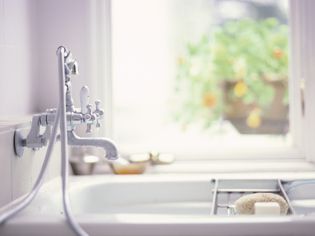
Bathtubs can last for decades. But along the way, acrylic or fiberglass tubs and showers may crack or develop blemishes, and cast iron or enameled steel tubs can rust, chip, or crack.
If you're not ready to replace the tub, it can be refinished. Another option is to install a bathtub liner: a solid unit that's the shape of your bathtub, just a little smaller.
What a Bathtub Liner Is
A bathtub or shower liner is a solid, single piece of acrylic or PVC plastic that fits inside of a bathtub, as a kind of second bathtub. The bathtub liner matches the contours of the bathtub. It seamlessly meets up with the drain hole, walls, and floor so that it looks just like a conventional bathtub.
Unlike refinishing, in which a spray coating of epoxy, urethane, or polymer material is applied, a liner is a solid unit that is molded in a factory, and then installed inside a bathtub. Since the tub liner is not a spray coating, it cannot be scratched off.
Bathtub liners come in two parts: a bottom unit that fits over the bathtub or shower pan, and an optional upper section, the surround, that extends from the edge of the bathtub or shower pan up the walls.
Quick
Minimal mess
No demolition
Cannot scratch off
Trapped water
Covers up problems
Makes tub smaller
Removal difficult
Pros
Bathtub liners are a faster fix than completely demolishing and replacing a bathtub. Not only that but liners cover up wall surround issues. Liners extend above the bathing area and up the walls.
Bathtub liners require no demolition. Tub and shower liner installation does come with some off-gassing from the adhesive used to attach the liner to the tub or shower, but the smell is considerably less than those produced by spray refinishing processes.
Cons
Bathtub liners mask but fail to correct underlying problems. The moisture in bathrooms can create mold and can even eat away at structural elements. These problems remain if they are not addressed before a liner is installed.
Bathtub liners can trap water. Should any water become trapped between the lower surface and the liner, this can create an environment for mold and mildew to grow.
Cost
The cost of a bathtub liner ranges from $700 to $3,200, for an average cost of about $2,000.
The cost of installing a bathtub liner includes leveling and preparing the current tub; installing the tub liner; connecting the plumbing and making sure it works; and disposing of materials.
Maintenance and Repair
Because water infiltration is a constant concern, keep all caulked seams in good condition. Re-caulk these seams as necessary. Keep the escutcheon around the shower controls tight and maintain the caulk.
Design
Bathtub liners are smaller than the bathtub. To fit into the bathtub, the bathtub liner must be smaller, so this reduces the width, depth, and length of the bathtub basin.
Bathtub liners are often installed with prefabricated wall surrounds. Since the look of the wall surround influences the overall look of the bathroom, it can be left off if the surround is in good condition.
Liners may feel weak, spongy, or less than stable underfoot. Because you are adding a layer of material, your bathtub inside will become slightly smaller when you use a liner.
Installation
Do-it-yourself bathtub or shower liner installation is not only difficult but access to bathtub liners is limited. Call a bathtub liner company to do the work.
- Measure the tub: When you contract with a firm to install a liner, a technician will visit to take precise measurements and photos of the bathtub or shower unit.
- Order the liner: An exact shell of the bathtub unit is made from 1/4-inch thick ABS or PVC, using vacuum-form technology. The acrylic shell is similar to the material used in many tub and shower units but is a thinner material. It can take as much as eight weeks for the shell to be prepared.
- Install the liner: Once the liner is delivered to the site, installation takes just a few hours. First, the old fixtures and drain fittings are removed, then the shell is inserted right over the old tub or shower unit, using silicone adhesives and two-sided tape.
- Finish the installation: New drain, overflow, stopper, and faucet fixtures are installed, and the work area is cleaned up. The complete installation of the tub or shower liner usually takes about one day.
Recommended Articles

11 Easy Ways to Make a Small Room Look Bigger
You may lament the lack of space if you're in the process of decorating a small room, but there are plenty of reasons why small is better: small spaces are easier to decorate, easier to keep clean, an

Is Farmhouse Design Out for 2025? We Asked Designers for Their Unfiltered Takes
As much as we love knowing what trends are on their way in, we also try to keep our eye on which trends are on their way out. From the segue away from cool gray to the fall of all-white kitchens, some

9 Essentials Everyone Needs for Their First Home, According to Pros
This story is part of Home School, our complete guide to making your first home your own, where we share our first-hand and expert advice on everything you need to know to make your first home your be
5 Tacky Kitchen "Upgrades" That Instantly Make a Home Look Bad, According to Designers
When it comes to renovating a kitchen, you want to make sure your time and money aren't wasted on bad design decisions that you'll regret in a couple of years. "Certain upgrades may seem exciting in t

15 Beach Cottage Decor Ideas Full of Coastal Charm
You don't have to live in a beach cottage to bring coastal vibes to your space. This easy, breezy style can work in any room in the house, from the kitchen to the bathroom, living room, bedroom, livin

Open Floor Plans Are Over—Why Designers Hate Using This Layout in Their Projects
Open floor plans, majorly in style at the beginning of the 21st century, have started to fall out of favor in more recent years. "While open floor plans are popular in a lot of new homes with their mo
Satin vs. Brushed Nickel: Which Finish Is Actually Right for You?
When comparing similar metallic finishes like satin nickel vs brushed nickel, learning the subtle differences before purchasing can make or break your home's aesthetic. Beyond appearance, learning the

Whole-House Remodel: Where to Start
With a whole-house remodel, the entire house is transformed. It's an exciting step that can also be a bit intimidating, given the scale of the project and the amount of planning that is required. The