

There are two important considerations when installing wall shelves: first, making sure the material used for the shelves has an appropriate span capacity; and second, considering the vertical spacing between the shelves—a decision that is based on the types of objects you will store on the shelves.
To prevent the shelves from sagging under the weight, you need to know the relative span limitations of different shelving materials. "Span" in this instance means the distance between supports for the shelf. Span limits are based on the strength of the material—the stronger the material, the more space you can put between wall supports. You may still be able to store fairly heavy objects on shelving materials with a short span limit, but you will need to support the shelf with support brackets that are spaced closer together.
Vertical shelf spacing is simply a matter of deciding what you will store on the shelves, and space the shelves accordingly.
Span Limits
The span limit is defined as the maximum distance apart that you can place the shelving supports. Glass, particleboard, solid lumber, plywood, and other common shelving materials can have span limits that can range greatly.
The load that the shelf carries will, of course, affect that allowable span, but for the following span recommendations, it is assumed that the shelf will support a full load of standard-sized hardback books.
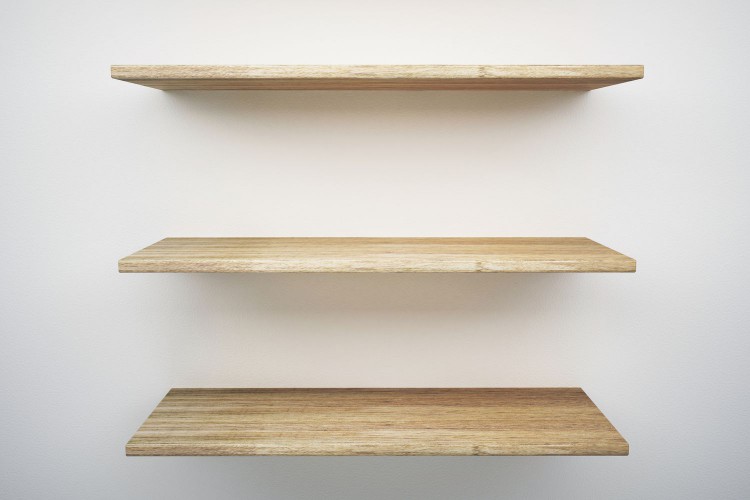
Plywood Shelves
Plywood for shelves should be 3/4 inch thick or thicker. Standard sheets of plywood come in 1/4-inch, 3/8-inch, 1/2-inch, 5/8-inch, and 3/4-inch thicknesses. Plywood panels over 3/4 inch in thickness are usually special order products. Thinner sheets of plywood can be glued together (laminated) to make a thicker panel for cutting sturdier shelves.
- The longest recommended span between wall supports for 3/4-inch-thick plywood shelves is 36 inches.

1 x Lumber Shelves
1 x lumber is standard building grade boards, such as nominal 1x8, 1x10, or 1x12 boards. Be aware that the actual thickness of standard lumber is less than the nominal measurement by which it is categorized. All 1 x lumber is about 3/4 inch thick. When choosing 1 x lumber for shelves, it's best to use select-grade lumber, which has fewer knots and other flaws that can weaken the wood.
- The longest recommended span between wall supports for 1x10 lumber is 24 inches.
- The longest recommended span between wall supports for 1x12 lumber is 28 inches.
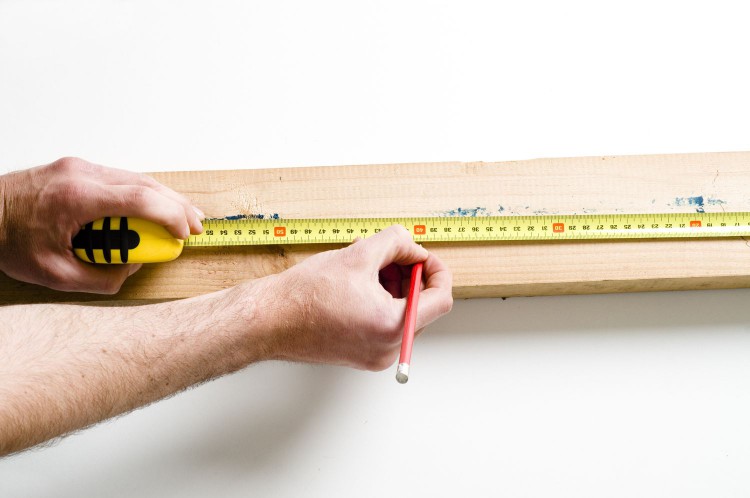
flashgun / Getty Images
2 x Lumber Shelves
2 x dimension lumber, such as 2x10s or 2x12s, actually measures about 1 1/2 inches thick. As with 1 x lumber, it's best to choose select-grade material that has fewer knots and will make stronger, more attractive shelves than construction-grade material.
- The longest recommended span between wall supports for 2x10 lumber is
48 inches. - The longest recommended span between wall supports for 2x12 lumber is
56 inches.

Particleboard Shelves
Particleboard is a manufactured product that is made from sawdust and other wood by-products bonded together with glues and resins. It is commonly sold in thicknesses of 3/8 inch, 1/2 inch, 5/8 inch, and 3/4 inch. Like plywood, particleboard can be glued and screwed together to create thicker shelves. Single-layer shelving made from particleboard should be at least 5/8 inch thick.
- The longest recommended span between wall supports for 5/8-inch particleboard is 24 inches.
- The longest recommended span between wall supports for 3/4-inch particleboard is 28 inches.
Glass Shelves
Spans for glass shelves are based on the type, thickness, and overall size of the glass. Common types of glass for shelves are annealed and tempered.
Tempered glass is much stronger than annealed, and it breaks into small pieces when shattered, while annealed glass breaks into large shards. Given all the factors involved, it's best to calculate a shelf's weight rating rather than relying on a basic span dimension when installing glass shelves. A glass supplier can recommend a safe weight for the glass you choose. Two examples are provided here:
- The maximum weight rating for 1/4-inch-thick x 11-inch-wide annealed glass supported every 24 inches is 29 pounds.
- The maximum weight rating for 1/4-inch-thick x 11-inch-wide tempered glass supported every 24 inches is 117 pounds.

Recommended Shelf Height Spacing
Use the following guidelines to determine the "clear shelf height" needed for the types of items you plan to place on your shelves. Clear shelf height is the space measured from the top of the lower shelf to the underside of the shelf above it.
- Paperback books: 8 inches
- Hardback books: 11 inches
- Large hardback/coffee table books/catalogs: 14 inches
- Magazines: 14 inches
- CDs: 5 inches
- DVDs (movie cases): 8 inches

Recommended Articles

Imani Kean Swears By the Power of Paint (Even in a Rental) and Her Home Is Proof
Renting Outside the Lines is a series that spotlights gorgeous rentals and how people make their rentals feel more like a forever home, even if it's a temporary space. You don't need to own a house to

6 Ways Designers Are Saving Their Money on Their Next Home Makeover (and You Should Too)
Key Points Designers save big by shopping secondhand, reusing quality items like furniture, frames, and fixtures that add character and reduce waste.They recommend reupholstering or refinishing existi
Attic Venting: What to Know and How to Improve It
Attic ventilation may not seem as important as some of the more glamorous aspects of home improvement, like installing new hardwood or renovating the bathroom, but that doesn't mean that it's not impo
Can You Tile Over Tile? 4 Things You Should Know Before Tackling This Project
If your home can support excess weight and the existing tiles are in good condition, you can consider tiling over tile. You should tile over tile to save time and money and it can also be an eco-frien
Can You Build on a Property or Utility Easement?
Easements can exist quietly on your property, not affecting you for years or decades. Then, when deciding to bump out your house, put on an addition, dig a pool, or erect a fence, you find a legal eas

Should You Rebuild a House or Remodel a House?
If you own a house that is getting a little shabby, it might be beyond the point of more minor home improvements. As with an older vehicle, minor repairs are good for keeping the car running, but even

We Asked Real Estate Pros Their Best-Kept Secrets to Sell Your House Faster in 2025
When you've finally decided to sell your home, the process of doing so can be challenging and confusing. Whether it's going through numerous open houses or waiting around for the right offer (or any o

Electrical Code Requirements for Bathrooms
Like the wiring in other parts of the home, the electrical service in bathrooms must follow the code requirements set forth by your local building inspection office. Over the years, these requirements