
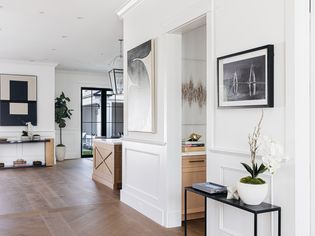
Wood paneling is often associated with the rich, elaborate look of older homes. But wood paneling is increasingly being used in contemporary homes to protect walls and to create visual interest.
Wood paneling adds to the cost of a room remodel, but it has many advantages that contribute to the home's durability and resale value. Wood paneling is a soundproofing material. In dining rooms, paneling protects the lower half of the walls against chair bumps. Natural wood paneling that is stained or clear-coated gives rooms a soothing feeling. Wood paneling can be painted for a more formal look.
Consider the many types of wood paneling for your home, including wainscoting, beadboard, shiplap, and more.
Wainscoting
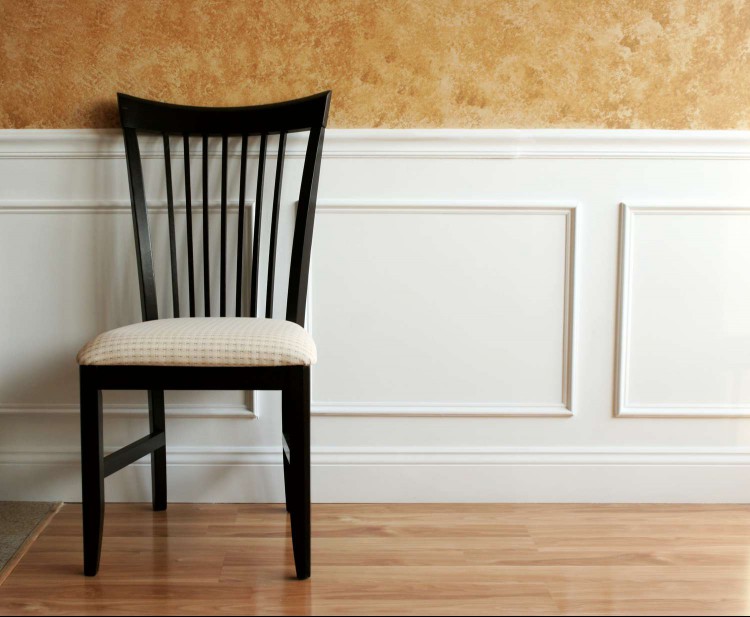
Wainscoting: Panels on the lower section of a room.
Wainscoting is any style of wood paneling that is on the lower one-half to one-third of a wall, usually around the entire room perimeter. Wainscoting protects the wall from damage, especially in areas prone to impact, such as dining rooms or children's rooms.
Wainscoting is commonly assembled from beadboard panels. Often, a thin strip of chair rail is run across the top of wainscoting as a visual cap and to receive the impact from chair backs.
Bobbieo / Getty Images
Beadboard
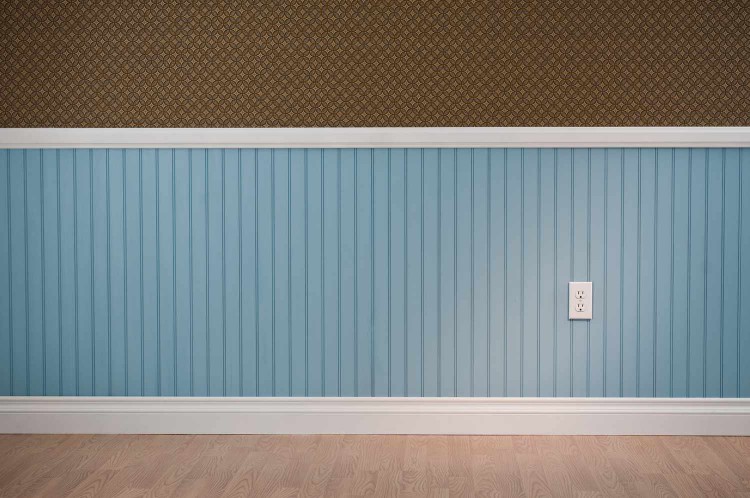
Beadboard: Vertically grooved panels with a traditional style.
Beadboard paneling is characterized by long, continuous vertical grooves and raised beads spaced every inch or two.
Beadboard is found in individual boards, each about 32 to 48 inches long by 3 to 4 inches wide. Boards fit side-to-side. Alternatively, beadboard can be purchased in large panels as long as 8 feet which expedite the installation process. The beads and grooves are molded into the board in the factory.
Spiderstock / Getty Images
Shiplap
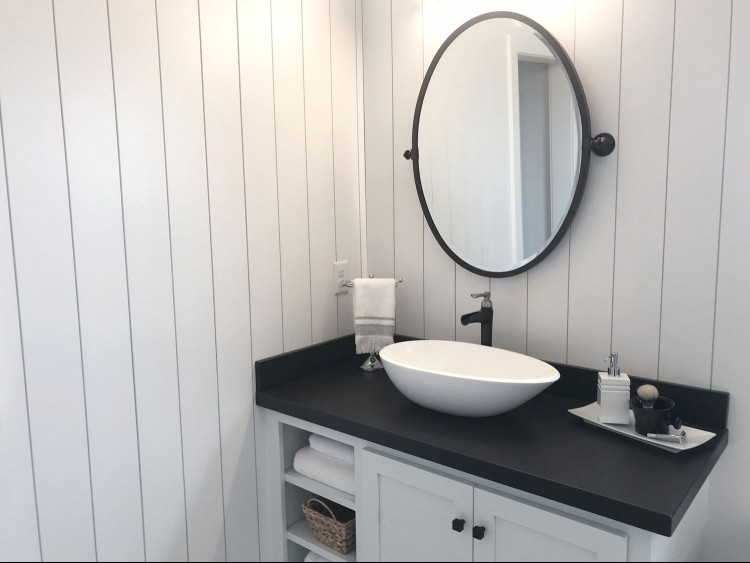
Shiplap: Horizontal siding boards similar to house siding.
Shiplap is a style of interior paneling whose inspiration comes from an exterior house siding of the same name. Shiplap panels are long, horizontal boards that overlap each other along the long edges. The lip of the upper board overlaps a part of the lower board. In exterior applications, this creates a joint that is weather-proof, tight, and stable.
Interior shiplap is more about appearance than function. Shiplap gives dining rooms, bedrooms, halls, or living areas a rustic, charming look. Shiplap can also be used on accent walls for a farmhouse or traditional look.
Tongue and Groove
Tongue and groove is a mode of attachment where the protruding tongue on one board slides into the receiving groove of an adjacent board. Tongue and groove attachment is used for paneling, exterior siding, ceilings, and flooring.
Board and Batten
Board and Batten: Wide vertical molding pieces installed on larger boards.
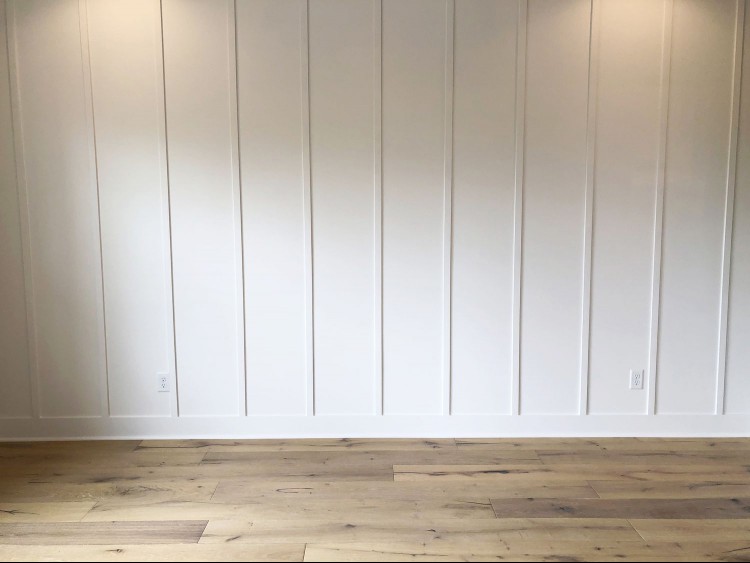
Board and batten paneling is noteworthy for its regular pattern of wide vertical molding boards called battens. Battens can be just an inch wide or several inches wide and are placed 6 to 10 inches apart from each other.
Board and batten paneling is a strong, severe look and was commonly used in early 20th-century homes. The battens serve to cover up the joints between the boards. Additional battens are placed between the joints merely for aesthetics.
TriggerPhoto / Getty Images
Coffered Panels
Coffered Panels: Inset squares in a grid pattern.
Coffers are often found in ceilings, where this grid pattern of inset squares breaks up flat planes to create visual interest. The name's origin is significant: cofre from French to mean chest or cophinus from Latin meaning coffin. In other words, these squares are deeply sunk.
Coffers in wall paneling are different because there is less space behind the panels to sink the coffer. So, with wall paneling, it's more the suggestion of a coffer than its full execution. This look is created by fixing vertical and horizontal boards to form the grid. Sometimes, each square is routered or has trim added to it for even more embellishment.

Raised Panels
Raised Panels: Deeply beveled squares or rectangles in panels for a classic look.
Raised panel is a type of wood paneling has a series of rectangles or squares that run in a line, separated 4 to 8 inches by vertical molding. Deep V-shaped bevels form raised wood panels, with horizontal rails at the top and the bottom.
Raised panel is a highly showy look; it's often found in expensive older homes. Due to the deep bevels, raised panels create deep shadows for a highly eye-catching look.
Raised panels are often incorporated into wainscoting. They can be purchased pre-built and ready for installation. MDF board or polystyrene panels can be molded into the raised panel style. Alternatively, they can be built from scratch with thin pieces of molding attached to flat panels.

Flat Panels
Flat Panels: Smooth, unadorned panels that impart a modern look.
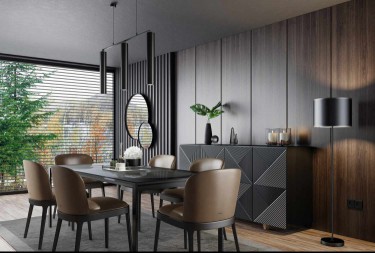
Flat paneling is completely smooth on the front and has no bevels, grooves, or beads. The only visual interruption in a line of flat panels will be the seams between the boards. The seams are sometimes left open; other times, they are covered with metal or wood strips.
Sleek and smooth, flat paneling is a hallmark of modern or contemporary design. The featureless face of the paneling lets the rich wood grain of the panel take precedence. Less focus is on the perimeter of the room—the paneling—with the room and its elements taking a front seat.
tulcarion / Getty Images
Recommended Articles
I Let a Paint Pro Find My Home's "Perfect" Colors, Including Some I Would Never Pick
If you’ve been on TikTok recently, the chances are high that you’ve come across color analyses. From beauty to clothes, people are turning to the pros to find out which colors best suit them. (Any oth

Is Farmhouse Design Out for 2025? We Asked Designers for Their Unfiltered Takes
As much as we love knowing what trends are on their way in, we also try to keep our eye on which trends are on their way out. From the segue away from cool gray to the fall of all-white kitchens, some

Learn the Rules for Overhead Clearance on Power Lines
Overhead power lines are subject to strict guidelines for minimum height clearances over streets, sidewalks, alleys, driveways, and other traffic areas. This is a safety consideration, aimed at keepin

How to Find Lawn Sprinkler Irrigation Valves
In a lawn irrigation system, repair or replacement of an irrigation valve is a very common repair. An irrigation system is typically divided into several zones, each of which feeds sprinkler heads in
What Are Leach Lines, and When Should They Be Replaced?
If your home has a septic system, it has leach lines or a leach field. An essential component of all onsite wastewater systems, leach lines are the last step in a process that starts at your sink or t

How to Avoid Utility Lines When Digging in Your Yard
Your property is interlaced with utility lines crisscrossing at various levels: electric lines, low voltage lines, water, cable, sewer, natural gas, and more. Digging on your property can lead to an e
5 Great Budget-Friendly Bathroom Flooring Options
Bathrooms are typically smaller rooms than most other spaces, and thus the choice of flooring material can have less budget impact than it does for more spacious rooms. For example, 70 square feet of
What's the Best Bathroom Vanity Height? Here's What to Know
Bathroom vanities, which are small countertops supporting sinks and storing accessories like toothbrush holders and soap dispensers, typically range from 30 to 34 inches in height. Some homeowners pre