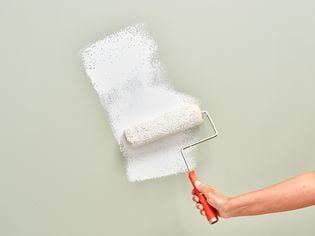
Should you always prime before painting? If so, how many coats of primer do you need? There's no one answer because the number of coats of primer depends on a few factors, such as the color you're painting over, the type of paint you're using, and the condition of the walls or surface you're painting. However, two coats of primer are typically used for most projects.
Keep reading to learn when to use primer and how many coats of primer are necessary before painting.
What Is Primer?
A primer is a base coat that comes before the final, or base and finish, coats of paint. Primer preps the surface and substantially improves the paint's adhesion and coverage.
Do You Really Need Primer?
You almost always need to prime a surface before painting. The only time you can potentially skip primer is when you buy paints with built-in primers. However, these self-priming paints are only effective for painting over walls in good shape that are already painted.
Primer is beneficial for covering old paint or paint in a very different color or higher sheen than you've chosen and preps the surface so the new paint adheres more effectively. However, many other situations require priming, such as:
- Painting unfinished wood: Bare wood does not accept paint well and needs to be primed so the paint sticks. Look for a primer formulated to seal knots when painting knotty wood.
- Applying latex-based paint over oil-based paint: If your existing walls are painted with oil-based paint, you'll need a bonding primer to help the new latex paint stick.
- Painting over plaster and joint compound: Walls that have been repaired or skim-coated with plaster and joint compound will look uneven unless primed. These patched surfaces soak up the paint differently than surrounding areas.
- Painting over new drywall: New drywall must be primed with PVA (polyvinyl acetate) primer, an inexpensive product formulated for drywall.
- Painting over stains or mold: Stains from water, mold, and other substances can be difficult to cover, requiring many coats of paint. Use stain-covering primers to cover ordinary stains and mold-killing primers to stop mold growth.
- Using lower-quality paints: You can often get away with using lower-quality paint if you use a decent-quality primer. However, inexpensive paints may not last as long as high-quality paints.
How Many Coats of Primer to Use
The number of coats of primer depends on the details of your project and the type of paint you're using.
When to Use One Coat of Primer
Use one coat of primer for the following situations:
- When painting over similar paint colors
- Going from a light paint color to a dark paint color
- Surfaces that are in good condition, including metal
When to Use Two Coats of Primer
Use two coats of primer when painting the following:
- Unfinished surfaces like wood
- New drywall (use PVA primer); new drywall soaks up paint and primer prevents the paint finish from looking splotchy and uneven when dry
- Preparing to paint over wallpaper
- Poor condition metal surfaces
- Drastically different paint colors
- Covering a dark paint color with a light paint color
When to Use Three Coats of Primer
You may never need three coats of primer. However, situations that may necessitate a third coat include:
- If the second coat of primer hasn't offered adequate coverage
- Painting over uneven surfaces like masonry, plaster, unfinished wood, and drywall joint compound
- Covering major stains, such as water damage on a ceiling
What Type of Primer to Use
Consult the label on your primer for proper application. Different surfaces call for specific types of primer and it's important to use the right one. When in doubt, ask the associate at the store's paint department for product recommendations. When applying primer, pay close attention to the manufacturer's instructions specifying how many coats of primer to use and any necessary steps to take between the coats, such as sanding.
- Does primer need to go on perfectly?
Primer doesn't need to look perfect but try your best to apply even coats of primer on a surface for best results.
Should I sand between coats of primer?It's not necessary to sand between coats of primer. You can lightly sand your last coat of primer for a smooth surface before applying color.
Will one coat of primer be enough?One coat of primer is usually enough if you are painting over walls with a similar color and the wall is smooth, undamaged, and in great shape.
Recommended Articles
 PAINTING
17 Home Projects You Should Tackle While You're Stuck Inside This Winter
Just because the temperatures plummet and snow covers the ground, doesn't mean you need to put away your tools and stop doing home projects. Instead, turn to those that can be completed during the win
HOME-DESIGN-STYLESWhat Is Midcentury Modern Architecture?
Known for clean lines, minimal decoration, and a connection with nature, midcentury modern architecture is an American classic that began after World War II. A midcentury modern house plan is characte
INTERIOR-DECORATING5 Designer-Approved Ways to Brighten Your Basement on a Budget That Actually Work
Add mirrors and try color drenching or layering for a brighter, cohesive look.Try a bold mural or peel-and-stick wallpaper to enhance brightness and style.Use light LVP or peel-and-stick flooring to b
ROOM-DESIGN-AND-DECORATINGConcrete Paver Review: Pros and Cons
Concrete pavers are a very popular building material used to pave driveways, walkways, patios, and other surfaces. Though they are often referred to as "cement pavers," that term is a bit misleading.
INTERIOR-REMODEL-AND-REPAIRWhat It Means to Have Low Humidity in Your House
The space inside your home can usually be considered a controlled environment, where you can raise or lower the temperature by adjusting the thermostat. Heat is sealed inside during colder months to e
OUTDOOR-BUILDINGTurning Your Shed Into a Tiny House? Here's What to Know
Turning a shed into a tiny house expands living or creative spaces, opens up short-term rental income opportunities, or provides a place for family members to stay. Learn how to turn a shed into a tin
OUTDOOR-BUILDINGHow Much Does a Tiny House Actually Cost? Everything You Should Know
The average tiny house cost is low compared to that of a traditional home, contributing to their recent surge in popularity. A tiny house is exactly what it sounds like: A house shrunk down in size (u
BATHROOM-REMODEL-AND-REPAIRHGTV's Scott McGillivray Shares His Top Tips to Keep Bathroom Renovations Stress-Free
Ah, the bathroom. This lowly, often overlooked spot in our homes is actually one of the hardest working rooms. If your bathroom has seen better days—we’re talking chipping tiles, constantly-running to