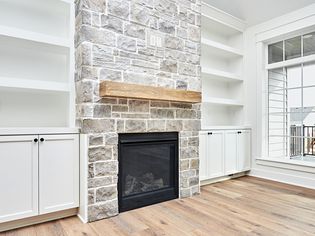
Want a fresh look for your stone fireplace without the expense of hiring a mason? A coat or two of whitewash can do the trick.
While regular white paint—or any color, for that matter—would also work, the opaque coverage will transform the color and look of the stone. Whitewash, on the other hand, provides a sheer tint that retains the stone’s gorgeous texture.
Let’s take a closer look at how to whitewash a stone fireplace. This DIY-friendly method can elevate a stone fireplace to become the focal point of any room.
What Is Whitewash?
Whitewash is simply white paint diluted with water. It's a wash of translucent color that, when applied applied to a fireplace, provides a fresh, clean look to the stone.
Yes, you can add water to any paint color, but white is the traditional color to use, hence the name. It’s as easy as mixing up a 1-to-1 ratio of paint and water, though depending on the coverage you’re going for with your stone fireplace, you might want a heavier pour on the paint or the water.
How to Whitewash a Stone Fireplace
Whitewashing a fireplace is a project that can be completed in an afternoon. Here’s how to do it.
1. Clean the Fireplace
Your fireplace cleaning method will vary depending on whether it's nonworking or working.
- Nonworking fireplaces just need a good dusting or vacuuming with a brush attachment.
- For fireplaces used occasionally, cover the floor with a drop cloth. Fill a gallon bucket with hot water mixed with about 1/4 cup of dish soap. Stir to create some suds, then scrub the fireplace down from top to bottom. Clean off any remaining soap or soot by going back with a wet rag—use fresh, cold water this time—and wipe the stone down.
- To clean off stuck-on soot, you might need to use a heavy-duty cleanser like trisodium phosphate, or TSP. Use protective gloves and goggles and read the instructions carefully before using.
2. Prep the Area for Whitewashing
Diluted paint is still paint, so keep that drop cloth on the floor and mark off the trim with painter’s tape to avoid spattering anything but the stone fireplace
3. Mix the Whitewash
Whitewash is a 1:1 combination of paint and water that you can mix in a measuring cup for smaller projects. For stone, opt for a latex or chalk-based paint—and make sure it's heat resistant if you're painting an active fireplace.
Choose a container big enough to pour and stir enough whitewash mixture for your fireplace; a gallon bucket should be just fine.
Err on the side of caution and make a bit more whitewash than you think you’ll need so that the coverage remains consistent.
4. Paint on the Whitewash
With a paintbrush, apply whitewash on a small, hidden spot first to test the coverage—you might need to add more water or paint depending on the look you want.
Once you're satisfied with the coverage, start painting from the top to bottom so you can paint over drips as you go. Keep a rag or cloth handy to clean up any excess.
5. Let It Dry
The fireplace will dry to the touch fairly quickly, but go ahead and give it a full 24 hours.
Tips for Maintaining a Whitewashed Stone Fireplace
When the job is done well, whitewash can last between 20 and 30 years. Here’s how to make your whitewashed fireplace look good for as long as possible:
- Choose quality paint. Just like good ingredients make for better cooking, good supplies make for better home improvement projects. You don’t have to go top of the line but do choose a brand of paint known for its longevity. (Make it heat-resistant if you plan to use your fireplace.)
- Seal it. It’s not a mandatory step, but a sealant can protect the whitewashed finish against scuffs, scratches, and other damage.
- Keep it clean between uses. Soot and creosote buildup can put a damper on a gorgeous fireplace. If yours is an active one, make sure to clear out ashes regularly between uses. Otherwise, you can get away with regular dusting or vacuuming with a brush attachment.
- What kind of paint do you use to whitewash a stone fireplace?
To whitewash a stone fireplace use latex or chalk-based paints, which are best for stone and other masonry, like brick. While any paint can crack or chip over time, heat-resistant paint will maintain the finish on a working fireplace for far longer.
What is the difference between limewash and whitewash?Limewash is a chalky white mixture consisting mainly of water and lime, which comes from limestone. Whitewash is a 50/50 mixture of paint and water. When When limewash is applied to stone, it sinks into the porous surface so that it won’t alter the texture of the stone. But when limewash is applied to stone, it remains on top of the stone without penetrating the surface and dries to a sheer finish.
Recommended Articles
 SMALL-SPACES
6 Mistakes You Should Avoid When Decorating Your Apartment, Designers Say
Whether you're moving into your first apartment or your fifth, it's always helpful to brush up on what types of decorating mistakes you will want to be sure to avoid. We spoke with four interior desig
INTERIOR-DECORATINGI Don't Care That I'm Renting — 7 Big Changes I'm Making to My New Apartment
After a year of sublets and crashing with my sister, I'm bordering on desperate to make my newly rented apartment feel like home. I have a limited set of tools, a passion for reading instructions thor
INTERIOR-DECORATINGTurn Rugs Into Artwork
Have an heirloom rug that you want to display, but don’t want to wear out? Maybe you picked up a pretty rug on your travels, but don’t want to replace the rug you already have. Or, perhaps you just th
ROOM-DESIGN-AND-DECORATING6 Kitchen Finishes Designers Recommend If You’re Tired of Stainless Steel
Key Points Pros suggest finishes like matte black, glass, or enamel to add personality and warmth.Matte black hides smudges, glass makes small kitchens feel bigger, and enamel brings vintage charm.Peo
ROOM-DESIGN-AND-DECORATINGWhat Is a Loft in a House?
A loft in a house is an elevated area that can serve various purposes, such as a bedroom, storage area, or activity space. Lofts differ from traditional finished attics, as they often lack full walls
ROOM-DESIGN-AND-DECORATING6 Popular Design Choices Designers Would Never Put in Their Own Homes
It's an interior designer's job to stay on top of the latest home trends. But it's not their job to love all of them. We asked three interior designers to dish the dirt on which popular design choices
INTERIOR-REMODEL-AND-REPAIROur Ultimate Renovation Checklist Will Help You Plan Any Project
When managing a renovation, whether it’s for a whole house or just a room, the best way to stay organized is with a home renovation checklist. Following a process and giving each step its due diligenc
BATHROOM-REMODEL-AND-REPAIR10 Plumbing Mistakes DIYers Always Make, According to a Pro
When it comes to plumbing projects, DIYers often find that they are learning on the job by jumping into something they aren't fully prepared to tackle. When this happens, mistakes are made, which can