Glass sheet backsplashes are a practical and sleek choice for a bathroom or kitchen backsplash, and they offer all the protection you need from a backsplash—guarding the wall from water, grease, and messes—while also adding a stylish color and minimalist, clean look.
The glass sheet backsplash is a sheet of glass that can be painted in the color of your choice and then installed on your wall. This approach offers a completely customizable look while being highly functional as it is easy to maintain and clean. They make a great alternative to stone or quartz and they offer a wide variety of colors.
Here are some of the highlights and benefits of this backsplash option.
Colors
Some manufacturers of sheet glass offer a palette of colors to choose from. The color is actually painted on the backside of clear glass. If you purchase from companies that bake their finish on at the factory, even better. This will ensure your finish won't chip or peel.
It is possible to install clear glass on a wall that is painted in order to dictate the color, but you have to be careful with this application. It is important to keep in mind that any bugs or dust that may fall behind your glass will be visible from the front, and there is no way to get back in between the glass and the wall to clean it off, so it is essentially something that will be visible for the life of your backsplash.
Applications
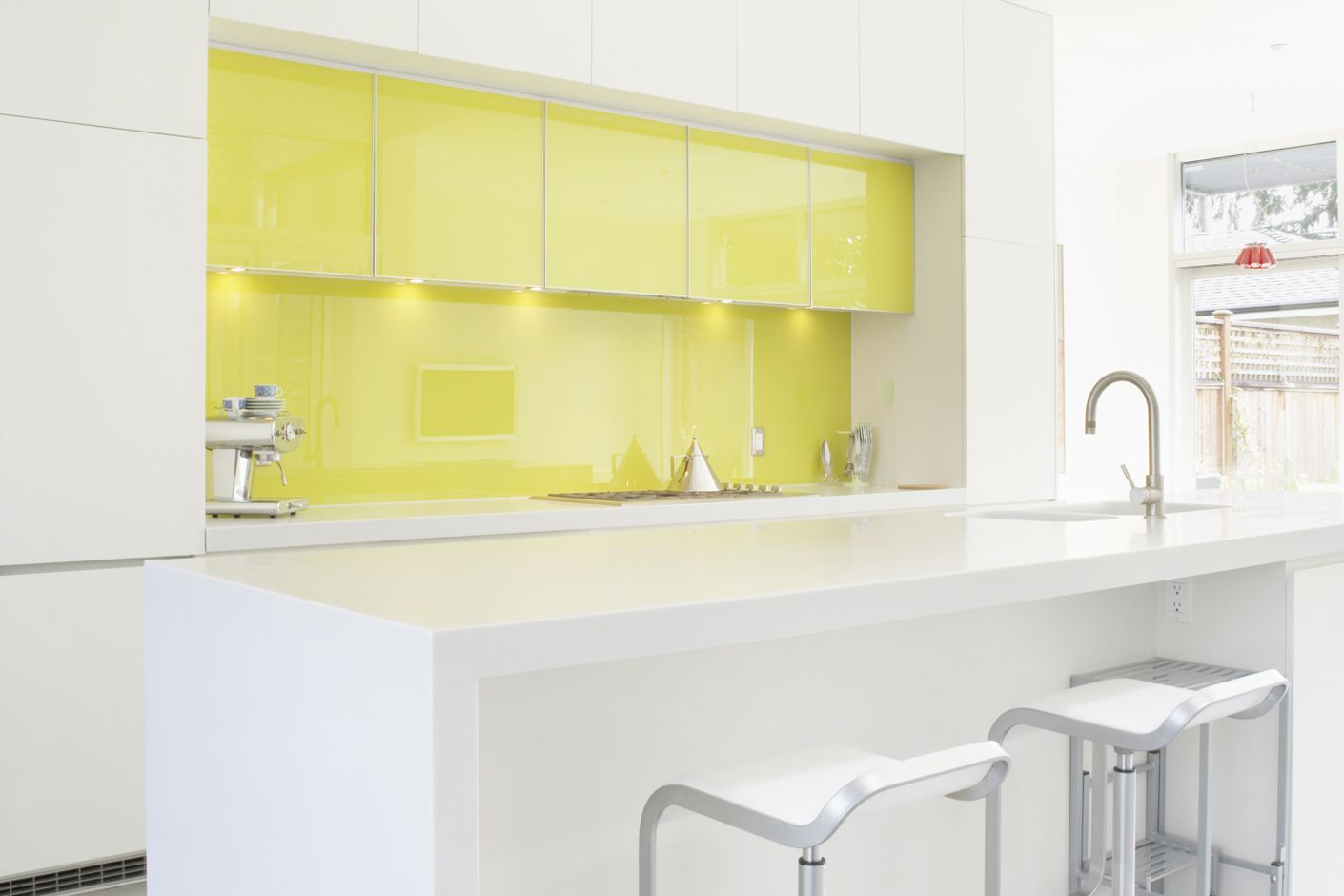
The contemporary kitchen is the design style for a glass sheet backsplash. Without grout joints, a sheet of glass is as visually clean as you can get.
You can run the glass full-height, half-height, or even as just a six-inch splash. There are some size limitations, so on large walls, there may need to be a seam or two where large pieces come together.
Cost
The cost of a glass sheet backsplash runs higher than glass tile. The installed price runs anywhere from $45 to $60 per square foot, while a glass tile backsplash will run approximately $31 - $55 per square foot. Metallic colors like silver, copper or gold tend to run higher than solid colors.
Installation
Installing a glass sheet backsplash in your kitchen should be done by a glass professional. They have tools to lift the glass and place it without snapping it or scratching it while it goes in.
The glass sheet is typically glued to the drywall and then caulked in at the edges if it meets a wall or other surface. It is also caulked in at the countertop connection. You can also have it attached to the walls with screws, though that will require a skilled professional.
Silicone caulk is necessary around the edges of a glass sheet backsplash to keep moisture from seeping in.
Tip
If you decide to do a glass sheet backsplash behind a stove, make sure to use tempered glass, which can stand up to the high heat of cooking.
Benefits
The benefits of a glass sheet backsplash are many.
- Easily cleanable surface: Glass is easy to wipe down making it a great option for the backsplash where food prep can easily splatter up on the backsplash while cooking.
- No grout joints to seal: With no grout the glass not only is easier to keep clean, but it does not require sealing of any kind. Another trend right now is extending your countertop material up to the wall, but most natural stones like marbles and granites will require sealing, while glass will not.
- Reflectiveness: Light bounces off of glass, making it a great option for a kitchen with a lack of natural light.
A glass sheet backsplash is a low maintenance option that is easy to make your own and moderately priced.
Considerations
Before you install a glass sheet backsplash, there are a few things to consider.
- Style: While both glass sheet and glass tile give you an easy to wipe down surface, you'll need to think about the style you're trying to achieve when considering tile v. sheet. A sheet is more minimalist, while tile may allow for more creativity.
- Placement: Is this going to be in a kitchen or a bathroom? There may be more room in a kitchen for a solid backsplash.
- Thickness: Depending on the use of your space, you may want to look at thinner or thicker glass sheet backsplashes. Typically, they range from 1/4" to 1" thick.
- Shape: While most glass backsplashes are rectangular, they don't have to be. You can add in curves and other shapes while still allowing the backsplash to cover areas prone to mess.
- What kinds of glass backsplashes are good for a kitchen?
Either a glass tile or glass sheet backsplash is an attractive and functional choice for a kitchen. When it comes to glass, there is either annealed or tempered glass, with tempered being the stronger, more durable option
How much do glass backsplashes cost?Glass sheet backsplashes run anywhere from $45 to $60 per square foot. A glass tile backsplash is slightly less at approximately $31 - $55 per square foot
What are the benefits of a solid glass backsplash over tile?A solid glass backsplash is easier to clean than glass tile since there aren't any grooves or grout to deal with. It also reflects light more consistently than tile.
Are there any disadvantages of glass backsplashes?Glass backsplashes can scratch due to the nature of their surface material and only tempered glass can be used in areas susceptible to high heat. They're also at risk of moisture becoming trapped behind them.
Recommended Articles
 SKILLS-AND-SPECIALTIES
Electrical Code Requirements by Room
The National Electrical Code (or NEC) is a document put in place to protect homeowners and residents from the dangers and risks posed by working with electrical connections. These residential electric
ROOM-DESIGN-AND-DECORATINGThe Ultimate Rug Size Guide
Choosing the right area rug size that's not too small or large for your space can help refine and balance a room in addition to making it warm underfoot. Rug size rules are flexible, and custom option
HOME-IMPROVEMENTSubflooring vs Joists vs Underlayment: What's the Difference?
Layered flooring systems are flexible, sturdy, inexpensive, and easy to build. The flooring system found in most homes starts with a floor covering (laminate, vinyl, tile, or other) on top of an optio
EXTERIOR-REMODEL-AND-REPAIRShould You Rebuild a House or Remodel a House?
If you own a house that is getting a little shabby, it might be beyond the point of more minor home improvements. As with an older vehicle, minor repairs are good for keeping the car running, but even
EXTERIOR-REMODEL-AND-REPAIRHow to Stain a Fence Like a Pro Just in Time for a Fall Refresh
The process of fence staining may seem daunting, but it doesn't have to be. Even if you're new to painting and staining, you can give your fence a brand-new look in just one weekend. Whether you want
EXTERIOR-REMODEL-AND-REPAIR8 Home Projects You Should Finish This Fall So You Don’t Pay for Pricey Repairs This Winter
Key Points Outdoor projects to prepare for the winter, like gutter or roof replacement.Heating upgrades, such as HVAC installation or fireplace replacement, should be done in the fall.Insulation, seal
BATHROOM-REMODEL-AND-REPAIRWhat a Sink Overflow Hole Is and How to Clean It
Bathroom sinks and some other fixtures include a sink overflow hole, or multiple holes, in the basin. This opening is either located near the top of the basin wall nearest to you or right under the fa
KITCHEN-REMODEL-AND-REPAIR17 Home Projects You Should Tackle While You're Stuck Inside This Winter
Just because the temperatures plummet and snow covers the ground, doesn't mean you need to put away your tools and stop doing home projects. Instead, turn to those that can be completed during the win