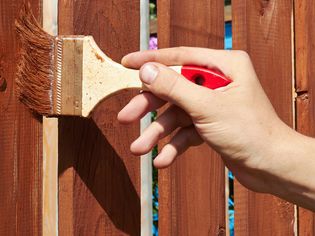
The process of fence staining may seem daunting, but it doesn't have to be. Even if you're new to painting and staining, you can give your fence a brand-new look in just one weekend. Whether you want a transparent stain that preserves the beauty of the wood or you prefer a dark stain that transforms your fence's look, staining a fence yourself is a great way to save money and protect your investment.
Below, we've explained how to stain a fence quickly like a pro and offered tips for getting the job done right.
Before You Begin
Staining a fence is a great project for beginner DIYers, as there's a lot of room for error. Unlike staining floors or painting your house's interior, staining a fence isn't a high-precision job.
As long as you choose the right tools, perform the necessary prep work, and complete any necessary repairs beforehand, you'll be shocked at how smoothly the project goes.
Want more home reno project tips and inspiration? Sign up for our free daily newsletter for the latest how-tos, reno guides, and more!
Sprayer vs. Roller and Brush
While you can apply stain with a roller and brush, a sprayer makes staining a fence dramatically quicker. Plus, sprayers make applying an even coat of stain an effortless task.
Some fence stains are designed to be used in a manual pump-style sprayer, while others are to be used in an airless sprayer, much like paint.
Prepping a Fence for Stain
Before you apply stain to a wood fence, make sure you clean it thoroughly. The best way to clean a dingy wood fence is with a pressure washer, but make sure to keep your distance and opt for a pressure washer nozzle with a high angle. After pressure washing, plan on giving your fence a few hours to completely dry before you apply stain.
How to Stain a Fence
Follow these steps to prep and stain your wood fence.
- Remove any brush and debris. The more accessible your fence is, the easier it is to properly prep it and stain it.
- Clean the fence. Using a pressure washer with a lightly aggressive nozzle, remove all dirt, grit, and grime from the fence. If necessary, employ a mild detergent or bleach solution to remove mold, mildew, and any other stubborn grime.
- Let the fence dry. Wood soaks up a lot of water, so give your fence ample time to dry after pressure washing it. If the fence is in the shade, it will take much longer to dry than if it's in the sun.
- Assess and repair any damage. There's no reason to stain damaged or rotting wood. While the wood is clean and you can get a good look at it, inspect all boards to ensure there's no damage. Replace rotten boards and fill any holes using exterior-grade wood filler before applying fence stain.
- Mix your stain. Thoroughly mix your stain according to the manufacturer's instructions. Many stains specify that you should gently stir them rather than shake them, as shaking can cause excessive bubbling.
- Load your sprayer. Fill your sprayer with stain and test it on a scrap piece of wood or cardboard. Keep an even distance and move steadily and consistently. Make any necessary adjustments to the sprayer before staining the fence.
- Stain the Fence. Once you feel comfortable with the sprayer, begin staining the fence. With each pass, overlap the last pass to keep a wet edge. If the stain is puddling, you're either too close or moving too slowly. Adjust your speed and distance to apply a light, even coat on the wood.
- Let the stain dry. Stain will likely dry quickly on a fence, as it's outdoors in the open air. However, you should still pay close attention to your manufacturer's specified dry times before applying a second coat or an additional sealer.
How Long Does Stain Last on a Fence?
Wood stain will last three to five years on a fence. Restaining every five years will protect the wood, but restaining every three years will keep the fence looking its best.
Fence Staining Tips
- Clean your fence thoroughly for proper stain penetration.
- Let the fence fully dry before staining.
- Applying multiple light coats of stain is better than one heavy coat.
- Look for a stain with a built-in sealer to offer more protection to your fence.
- Use a dark stain to blend the look of mismatched boards.
- Check the forecast to ensure the temperatures are mild and no rain is coming.
- Apply the stain evenly and consistently to ensure the fence looks the same from start to finish.
- Spend a few more dollars on a high-quality fence stain for long-lasting coverage.
- What is the best way to stain a fence?
The best way to stain a fence is to use a paint sprayer. Sprayers allow you to apply an even coat of stain on a fence immensely faster than you could with a roller and brush.
How much does it cost to stain a fence?The average cost to stain a fence is $1,700, but you can save 60% by skipping the call to a paint professional and staining the fence yourself. Furthermore, the cost of staining a fence varies drastically depending on the size and style of the fence. Large privacy fences require much more stain than small rail-style fences.
Do you need to prep a fence before staining?It's crucial to prep a fence before staining. Failing to remove the gunk and grime that tends to build up on wooden fences before applying stain will cause the stain to poorly penetrate the wood's surface. While the finish may look good immediately after application, it will soon fail, leaving you with a mess and an unsightly fence.
Recommended Articles
 PAINTING
How Many Coats of Primer Do You Need?
Should you always prime before painting? If so, how many coats of primer do you need? There's no one answer because the number of coats of primer depends on a few factors, such as the color you're pai
INTERIOR-REMODEL-AND-REPAIRI Faked an Apartment Reno By Adding Renter-Friendly Architectural Details—Here's How
This story is a part of our Old House New Issue, where we explore why people are no longer moving in 2024, and how to renovate your current home to make it work for you. To learn more about where to s
INTERIOR-REMODEL-AND-REPAIR6 Headache-Saving Tips You Should Know Before Starting a Remodel, According to Designers
You may finally be ready to update your home whether it's trying a new paint color or swapping out your current light fixture. However, there are some fundamental things that designers, architects, or
OUTDOOR-BUILDINGHow Much Does It Cost to Build a Barndominium?
Barndominiums are a type of home that combines living areas with workspace, often inside a restored barn or a new barn-like metal building. These unique structures are gaining popularity as alternativ
EXTERIOR-REMODEL-AND-REPAIRShould You Rebuild a House or Remodel a House?
If you own a house that is getting a little shabby, it might be beyond the point of more minor home improvements. As with an older vehicle, minor repairs are good for keeping the car running, but even
EXTERIOR-REMODEL-AND-REPAIR19 Home Updates You Need to Make Before Extreme Weather Hits, Home Pros Say
Most homes aren't prepared for extreme weather, whether it be strong winds, flooding, wildfires, or other events. Luckily, there are some renovations you can do to prepare your home for extreme weathe
BATHROOM-REMODEL-AND-REPAIRHow to Choose the Right Shower Light
Showers tend to be dimly lit spaces. General bathroom lighting is usually adequate for minimal shower needs, but adding shower lights can immensely brighten the shower and let you see exactly what you
KITCHEN-REMODEL-AND-REPAIREssential Housewares & Appliances
Whether you're setting up a home for the first time or you're replacing lost items, this checklist of house essentials can help ensure you're covered for the basics. It can also come in handy when you