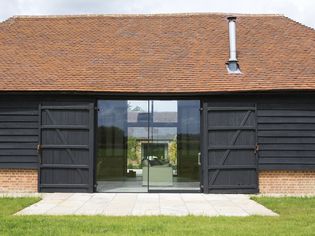
Barndominiums are a type of home that combines living areas with workspace, often inside a restored barn or a new barn-like metal building. These unique structures are gaining popularity as alternatives to traditional homes and can be built from kits. The cost of constructing a barndominium typically ranges from $65 to $160 per square foot. Their spacious design makes them ideal for large plots of land, especially in rural settings or on farms, where they can serve as weekend retreats or full-time residences.
What Is a Barndominium?
A barndominium is a restored barn or a new barn-like metal structure with spacious living quarters. It's often a hybrid space with a living area under the same roof as a workshop, vehicle bay, or storage area. Also called a barndo or a shop house, many barndominiums have second stories and mezzanines or lofts overlooking work areas.
How Much Does a Barndominium Cost?
A barndominium's cost depends on land ownership, available services like electricity and water, the barndominium type, and local material and labor costs.
Barndominium kits cost $30 to $50 per square foot for the shell and assembly, while a complete barndominium averages $120 per square foot. Note that workspace areas cost less per square foot if you incorporate that type of space into your barndominium.
For many buyers, the low price point of the metal barndominium shell is the draw. Metal building kit prices, uninstalled and unfinished, can vary—here are some sample prices:
- 1,200 sq. ft. (30 ft. x 40 ft.): $36,000-$60,000
- 1,600 sq. ft. (40 ft. x 40 ft.): $48,000-$80,000
- 2,400 sq. ft. (40 ft. x 60 ft.): $72,000-$120,000
- 2,800 sq. ft. (40 ft. x 70 ft.): $84,000–$140,000
- 3,200 sq. ft. (40 ft. x 80 ft.): $96,000–$160,000
- 3,600 sq. ft. (60 ft. x 60 ft.): $108,000-$180,000
- 4,000 sq. ft. (50 ft. x 80 ft.): $120,000-$200,000
- 5,000 sq. ft. (50 ft. x 100 ft.): $150,000-$250,000
Cost of Barndominium Plans
If you choose to bypass a kit and instead start with a stock floor plan for a barndominium, it will usually cost around $1,500 to over $2,000 with modifications. A custom-designed floor plan for a barndominium can cost an extra few thousand dollars.
Pros and Cons of a Barndominium
Durable construction
Cost-efficient housing alternative
Customizable space
Easy kits available for DIY builds
Less maintenance than standard house
Less construction time than standard house
Metal corrosion potential in some climates
Financing difficult to obtain
Some towns may not allow them
May be difficult to sell
Not very soundproof
Do-It-Yourself Barndominium
Building a do-it-yourself barndominium saves on labor costs. When building a barndominium from scratch, at least half of the cost is from the foundation and the building shell. Barndominium shell kits are pre-engineered, so they just need to be assembled.
A large barndominium (72 ft x 40 ft) may cost $153,000 to $182,000, including these elements:
| Item | Low | High |
| Building Shell | $45,000 | $48,000 |
| Foundation | $58,000 | $60,000 |
| Interior Structure | $4,000 | $5,000 |
| Electrical | $4,000 | $6,000 |
| Insulation | $6,000 | $9,000 |
| Kitchen | $5,000 | $8,000 |
| Doors | $2,000 | $3,000 |
| HVAC | $7,000 | $8,000 |
| Flooring | $3,000 | $4,000 |
| Plumbing Under Slab | $4,000 | $6,000 |
| Drywall | $4,000 | $6,000 |
| Inner Structure | $4,000 | $6,000 |
| Water Treatment | $2,000 | $3,000 |
| Bathrooms | $4,000 | $5,000 |
| Plumbing Materials | $2,000 | $3,000 |
| Lighting | $1,000 | $2,000 |
Barndominium Considerations
Land
Purchasing land is often part of building a barndominium since building in developed residential areas can be difficult, due to zoning and permitting.
The average value of farm real estate reached $3,380 per acre in 2021, according to the USDA. But for purposes of building a barndominium, that cost may be less, since the USDA estimate includes land that might already have buildings.
Location matters, too. The average is skewed by just a few states with off-the-charts expensive acreage, with four states in the eastern United States averaging costs of more than $12,000 per acre. Except for California and Arizona, all Western U.S. states are below the national average, and some acreage even costs in the hundreds of dollars.
Access
The site will need access from the public road. If there is no road, one must be built.
Asphalt roads cost $70 to $170 per linear foot on average to build. So, a quarter-mile of paved private road will cost from $92,400 to $224,400.
Low cost is the main driver behind the popularity of private gravel roads. For each linear foot of gravel foot, expect to pay from $14 to $25 (at 30 feet wide).
Zoning and Permits
Residential zoning may not permit the building of large metal-structure barndominiums. Large acreage located in unincorporated areas is best for building this kind of structure.
Generally, the permit process for barndominiums is the same as for residential construction. The permitting agency will charge you either by the square foot or by an estimated building cost. You'll also need to submit architectural plans, consisting of a floor plan, elevations, a basic electrical plan, and often a plumbing plan.
Also required will be a site or plat plan (showing divisions), so the permitting agency can see the barndominium's location to the property line and any easements.
Finally, for metal buildings, you will be required to submit engineer drawings. If you purchased the building from a metal building manufacturer, they should be able to send you stamped, sealed engineer's drawings.
Utilities
Unless the site already has power, you'll need to pay the electric company to bring the wire to the site at a cost ranging from $25 to $50 per foot. For sites that are set a half-mile back on the properties, this can mean bills of $67,000 to $132,000—just for the power.
Installing a septic tank and leach line is comparatively inexpensive, costing around $6,800, on average.
If the property does not have a municipal water supply, a well must be dug. The average cost of digging a well about 100 feet deep is $6,000, though low water tables can mean deeper wells and higher costs.
Adding a water treatment and purification system, necessary for drinking water, will run between $1,000 and $3,000, not including labor.
Barndominiums: Blending Uses
Barndominium work areas can be any size. Ranchers, farmers, and business people may reserve as much as one-third or one-half of the ground floor for vehicles and large equipment.
Owners with non-commercial interests, like making beer or wine, sculpting, fixing vehicles, painting, or woodworking, may need less of the barndominium square footage devoted to work use.
Living and work areas are always accessible through inner doors or hallways—without having to step outside, a bonus during inclement weather. High BTU natural gas or electric heaters warm up workspaces and keep them toasty on cold winter days. For sizable work areas, plan on a 125,000 BTU unit at a minimum.
Barndominium Exteriors and Interiors
Though most barndominium exteriors look utilitarian, the interiors are comfortable, well-appointed spaces with multiple bedrooms and bathrooms, a fully functioning kitchen, living areas, entertainment rooms, offices, and of course, large work sections. Even restored barns turned into barndominiums have beautifully designed interiors.
With restored barns or outbuildings, you'll find all the rustic-chic farmhouse aesthetics of a true country barn, including white clapboard or batten-and-board siding, horse hitches, industrial lights, natural stone, and wooden double-hung windows, to name a few.
In general, barndominium exteriors are mostly unadorned metal structures made from sturdy, non-combustible shells that protect against rain, snow, sun, and fire (metal can be damaged by fire but not as readily as with wooden structures).
Metal structures' strength-to-weight ratios allow you to build so large and so high, with so much open interior space. Metal also resists wood-boring insects, rot, mold, and all other forms of decay that plague wooden structures.
Exterior Barndominium Costs
Expect these price ranges for barndominium exterior features:
| Item | Low | High |
| Siding (per sq. ft.) | $3 | $13 |
| Landscaping designers (per hr) | $50 | $150 |
| Landscaping (per hr) | $50 | $100 |
| Driveway (per sq. ft.) | $3 | $12 |
| Concrete patio (per sq. ft.) | $4 | $12 |
| Building a deck (per sq. ft.) | $25 | $50 |
| Fencing (per sq. ft.) | $20 | $60 |
Interior Barndominium Costs
Expect these prices for barndominium interior features:
| Item | Low | High |
| Drywall (per sq. ft.) | $1.50 | $3.50 |
| Insulation (per sq. ft.) | $1 | $4.50 |
| Flooring (per sq. ft.) | $4 | $15 |
| Painting (per sq. ft.) | $1 | $6 |
| Cabinetry | $4,500 | $15,000 |
| Doors | $155 | $688 |
| Appliances | $2,500 | $6,800 |
Utility Costs
Expect these prices for barndominium utilities:
| Item | Low | High |
| Plumbing setup (per sq. ft.) | $4 | $6 |
| Electricity setup | $6,000 | $22,500 |
| Electricity power lines (per sq. ft.) | $5 | $25 |
| Drilling a well for water (per sq. ft.) | $25 | $65 |
| Adding a sewer line | $1,600 | $7,200 |
| Septic system installation | $3,500 | $8,500 |
Barndominium Sizes
Here are a few sample room configurations for a small, medium, and large barndominium.
| Size | Total Square FootageWith 2 Levels | Room Options |
| 30 ft. wide x 40 ft. long | 2,000 sq. ft. living space | 2 bedrooms, kitchen, bathroom, floor-to-ceiling work bay of 400 sq. ft. |
| 40 ft. wide x 75 ft. long | 5,000 sq. ft. living space | 2-3 bedrooms, kitchen, kitchenette, 2 baths, entertainment space, work bay of 1,000 sq. ft. |
| 60 ft. wide x 70 ft. long | 8,200 sq. ft. living space | Customizable space can house multiple bedrooms, kitchens, baths, separate apartment, plus work bay |
- Is it cheaper to build a barndominium or a house?
Yes, building a large prefabricated metal barndominium, around 2,000 to 3,000 square feet, is usually cheaper than constructing a traditional house. Barndominiums are quicker to build, reducing both time and labor costs. However, the total cost depends on the size, how much work you do yourself, and the choices you make for materials and finishes.
What is the downside to a barndominium?The downsides to a barndominium include more complex steel construction repairs compared to wood, brick, or concrete. Metal can rust over time, and obtaining financing can be challenging. Barndominiums may also be harder to sell, and zoning laws might restrict where you can build them.
What is the lifespan of a barndominium?A barndominium typically lasts between 50 and 150 years. The lifespan depends on materials used, maintenance, and weather conditions. While wood barns might last longer, they can be more vulnerable to damage from natural disasters, moisture, pests, or rot.
What is the most expensive part of building a barndominium?The interior finishes are usually the most expensive part of building a barndominium. New cabinetry can cost up to $15,000, and appliances might run up to $6,800.
What is the most cost-effective barndominium size?The most cost-effective size for a barndominium is typically between 1,500 and 2,500 square feet, with many measuring about 2,500 square feet.
Recommended Articles
 PAINTING
7 Easy Home DIYs for Your Best Thrift Store Finds, Straight From Designers
Thrift stores aren't only full of potential home goods, but they're teeming with objects that make for perfect DIY supplies. Even the most unsuspecting picture frame or glass bowl can end up transform
PAINTINGDoes Paint and Primer in One Work? What to Know Before Buying
Paint and primer in one, or self-priming paint, is a great option for many DIYers to save time when painting the interior or exterior of a home. This type of paint works well for many projects, howeve
ROOM-DESIGN-AND-DECORATING7 Kitchen Cabinet Colors That Are So Outdated, According to Interior Designers
Key Points Avoid outdated cabinet shades like navy, cherry wood, mustard yellow, and country red.These colors once felt warm or luxurious but now make kitchens look dated or overly themed.Instead, cho
ROOM-DESIGN-AND-DECORATINGBasic Steps of Kitchen Remodeling
Few home remodeling projects come with more benefits—and more headaches—than a major kitchen remodeling job. If you hire a general contractor to manage a major job that expands the kitchen footprint,
INTERIOR-REMODEL-AND-REPAIROur Ultimate Renovation Checklist Will Help You Plan Any Project
When managing a renovation, whether it’s for a whole house or just a room, the best way to stay organized is with a home renovation checklist. Following a process and giving each step its due diligenc
INTERIOR-REMODEL-AND-REPAIRWhat Happens to Your Home in the Humidity? 6 Major Issues You Should Watch For
Not only is high humidity uncomfortable for you, it can actually cause serious damage to your home. Especially in the dog days of summer and long bouts of rainfall, humidity levels have been rising at
INTERIOR-REMODEL-AND-REPAIR5 Home Renovations That Just Aren't Worth Your Money This Year, According to Designers
The New Year is officially here, which means many homeowners are already eagerly planning the home projects and renovations they plan to complete this year. From kitchen upgrades to bath renovations t
EXTERIOR-REMODEL-AND-REPAIRShould You Rebuild a House or Remodel a House?
If you own a house that is getting a little shabby, it might be beyond the point of more minor home improvements. As with an older vehicle, minor repairs are good for keeping the car running, but even