A squeaky door is a constant annoyance. While a little bit of lubrication might quiet a squeaky door temporarily, constantly having to lubricate it is a telltale sign that something is wrong. If you frequently have to oil door hinges and pins, a lack of lubrication likely isn't the cause of your door's squeak.
Below, we've explained the common causes of squeaky doors and what you can do to fix the problem for good.
What Is Causing Your Door to Squeak?
There are many ways that door components can fail and begin squeaking. Here are some common causes of squeaky doors:
- Dry Hinges. One of the most common reasons doors begin to squeak is that the hinges are dry and need lubrication.
- Worn or damaged hinges and hardware. Hinges can also begin to squeak if they become worn or damaged.
- Misaligned hinges. Hinges are fairly simple to install, but if they are slightly misaligned, they can cause a door squeak that can be hard to pinpoint.
- Loose hardware. As a door is used, it can cause the screws to loosen or strip the wood.
- Warped and aging wood. A wood door may warp due to humidity changes, leading to noisy rubbing.
- House settling. As a home's foundation naturally settles, doors can sag and become misaligned. Without adjustment to account for the settling, doors may begin to squeak or fail to latch.
Want more home reno project tips and inspiration? Sign up for our free daily newsletter for the latest how-tos, reno guides, and more!
How to Oil Door Hinges and Pins
-
Remove the Hinge Pin
To remove the hinge pin, place a small screwdriver on the bottom of the pin and tap it with a hammer. The pin should lift from the barrels of the hinge.
If the hinge pin won't come out, spray a light amount of penetrating oil and return to it after a few minutes of soaking.
-
Clean the Hinge Pin
Clean the hinge pin thoroughly with a degreaser and a light-duty scouring pad. To remove rust, steel wool and white vinegar may be more effective. Once clean, thoroughly dry the hinge pin.
-
Clean the Hinge Barrels
Clean the hinge barrels using a degreaser. If they are considerably dirty or rusty, unscrew them from the door frame for easier cleaning.
To remove rust from the inside of the barrels, follow these steps:
- Soak the hinge in a 1:1 mixture of water and vinegar.
- Roll up a piece of sandpaper and slide it into the hinge barrels.
- Work the sandpaper back and forth to clean off the rust.
- Rinse the hinge and thoroughly dry it.
Warning
Vinegar may damage certain types of metal. If you're unsure what metal your hinges are made of, test the vinegar out on a small hidden area before proceeding.
-
Oil the Hinge Pin and Barrels
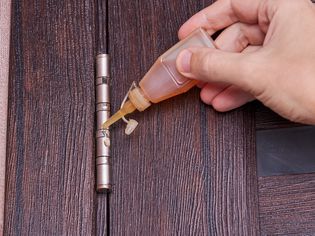
Once the pin and barrels are completely dry, apply a thin layer of silicone oil.
-
Reinstall the Hinge Pin
If all the steps above were completed, the hinge pin should easily slide back into the hinge barrels.
6 Ways to Fix a Squeaky Door
Here are some lubricants you can use to fix a squeaky door. You may have some around the house, while others may warrant a trip to the hardware store.
Silicone Spray
Silicone spray is one of the best lubricants you can use to quiet a squeaky door. For best results, remove the hinge pin and spray it thoroughly.
Lithium Grease
Lithium grease lasts longer than silicone spray as a door hinge lubricant, but it's generally much messier to apply. Additionally, whereas silicone is safe for hinges with nylon and plastic parts, lithium grease is not.
Hairspray
Want a quick fix to silence that squeaky bathroom door before it wakes your kids up? Grab some hairspray out of the cabinet and spray the hinge. Work the hinge back and forth and give it another spray.
The polymers in the hairspray will minimize the movement of the hinge and quickly quiet it but don't count on hairspray as a long-term solution for fixing a squeaky door.
Petroleum Jelly
Another squeaky door solution you may find in your bathroom cabinet is petroleum jelly, more commonly known as its branded namesake Vaseline.
Because petroleum jelly lacks any penetrating power, you'll want to remove the hinge pin, give it a good cleaning, then coat it with a thin layer of petroleum jelly before reinstalling.
Paraffin Candles
Yes, you can even use a candle to grease your door hinge. Simply melt a paraffin wax candle, slide out the door hinge, and thinly coat it with melted wax.
Olive Oil
No time to run to the hardware store? Head to your kitchen pantry instead. Olive oil works wonderfully to silence squeaky door hinges.
To minimize the mess, utilize an oil can or a small syringe, such as the kind included with children's medicine. The olive oil should penetrate the hinge, but it may be helpful to slide the hinge pin out slightly.
- What is the best way to stop squeaky door hinges?
The best way to stop squeaky door hinges is to lubricate the hinge pins with a lubricant that will stick to the metal and stay in place long-term. Two of the most effective door hinge lubricants are silicone spray and lithium grease.
How do you fix a squeaky door without taking it apart?The key to fixing a squeaky door without taking it apart is to use a penetrating oil that can soak into the hinges without removing the pins from the hinge barrels.
Can you use Vaseline to lubricate door hinges?Vaseline is a great option for lubricating door hinges. While you may be able to lubricate the hinge by simply rubbing vaseline on the outside of the hinges until it squeezes into the internals of the hinge, you'll likely have better luck if you remove the hinge pins and coat them with Vaseline.
Recommended Articles
 PAINTING
Does Paint and Primer in One Work? What to Know Before Buying
Paint and primer in one, or self-priming paint, is a great option for many DIYers to save time when painting the interior or exterior of a home. This type of paint works well for many projects, howeve
INTERIOR-DECORATINGTurn Rugs Into Artwork
Have an heirloom rug that you want to display, but don’t want to wear out? Maybe you picked up a pretty rug on your travels, but don’t want to replace the rug you already have. Or, perhaps you just th
ROOM-DESIGN-AND-DECORATINGWhere's the Best Place to Put Your Humidifier in Winter? Home Pros Share What Not to Do
If your home's dry air is starting to take a toll, a good humidifier can turn things around pretty quickly. But during the coldest season, you might be wondering where the best spot is for your humidi
INTERIOR-REMODEL-AND-REPAIRWhat Not to Fix When Selling a House: 10 Tips Pros Want You to Know
Knowing what not to fix when selling a house is as important as knowing what to fix. Large appliances are too expensive to fix or replace, while other items, like window treatments or smart home techn
INTERIOR-REMODEL-AND-REPAIR5 Overlooked Reno Ideas That Add Major Value to Your Home, According to a Contractor
This story is a part of our Old House New Issue, where we explore why people are no longer moving in 2024, and how to renovate your current home to make it work for you. To learn more about where to s
OUTDOOR-BUILDINGHow Much Does It Cost to Build a Barndominium?
Barndominiums are a type of home that combines living areas with workspace, often inside a restored barn or a new barn-like metal building. These unique structures are gaining popularity as alternativ
KITCHEN-REMODEL-AND-REPAIR5 Types of Kitchen Lighting
Kitchen lighting can be divided into either general lighting (the entire room) or work lighting (specific areas). Within those two broad categories are ceiling lights, recessed lights, track lights, p
KITCHEN-REMODEL-AND-REPAIRWhat Is an Induction Cooktop? All the Pros and Cons to Know
Induction cooktops look nearly identical to standard smooth-top ranges but there's much more to them than meets the eye. Functionally, there's a big difference between induction cooktops and ordinary