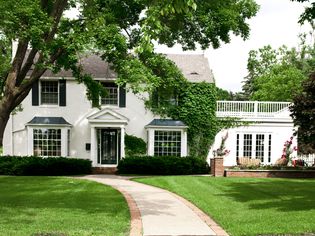
Colonial-Revival style homes are a significant part of American architectural history. Emerging from Colonial architecture, they became most popular in the 1940s but started declining in popularity post-World War II. Despite this, Colonial-Revival homes remain one of the most lasting examples of American architectural design.
Origins of Colonial-Revival Style
Colonial Revival is a reinterpretation of earlier American Colonial homes that focused on simpler, symmetrical, practical designs. Major influences that led to the development of this style:
- European architecture: Colonial architecture in the U.S. was heavily influenced by British, Dutch, Spanish, and French designs, with more restraint and less luxury and opulence. Colonial-Revival merged simple, symmetrical American Colonial styles with ornate Victorian-era embellishments.
- American pride: Colonial Revival was spurred on by the 1876 Centennial Exposition celebrating the 100th anniversary of the signing of the Declaration of Independence, which increased interest in preserving buildings of architectural interest.
- New building techniques: Architects and builders were able to take more liberties when building newer Colonial-style homes thanks to technological advances and increased access to building materials.
jhorrocks / Getty Images
Key Characteristics of Colonial-Revival Homes
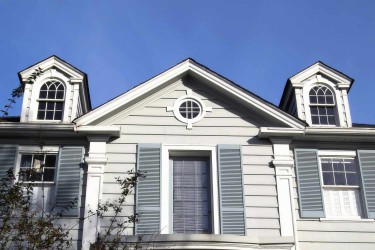
Colonial-Revival style homes mix the simple symmetry and structure of the Colonial style with the fanciful details of Victorian-era architecture. Key Colonial features such as simple layouts, symmetrical window designs, and gabled roofs joined ornate Victorian features like intricate detailing, porticos, moldings, and large windows.
- Roof style: Front-gabled or side-gabled roofs, hip roofs, and gambrel roofs emphasize the diversity of inspiration from early English, French, Spanish, and Dutch Colonial design. The varying rooflines give this style a wide variety of expressions.
- Floors: While two-story Colonial-Revival homes are most common, a prevalent sub-type of this architectural style is the typically one-floor Cape Cod home.
- Windows: The windows are multi-paned and are often decorated with shutters or pediments, as are the doors. Unlike simple Colonial designs, these shutters and pediments are often fancifully decorated with cutout designs or carvings.
- Entrances: Small porticos and pillars at the entrances, and ornate moldings and detailed work dress up the simplicity of original Colonial-style homes.
- Interior layout: Interiors comprise distinctly divided rooms and often feature a central staircase similar to Colonial designs. The style lends itself to a traditional interior design.
lillisphotography / Getty Images
American Colonial vs. Colonial-Revival
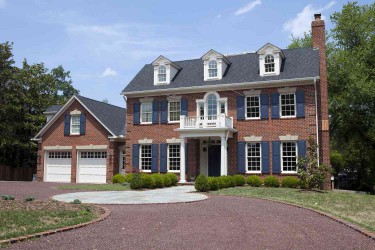
American Colonial and Colonial-Revival architecture share the same roots. Homes built in both styles tend to have a rectangular footprint and a traditional approach to design, whereas Colonial-Revival style introduces elements and features not seen in the plainer American Colonial style.
Large windows, often in pairs
Grand entryway with showier portico or pediment. May include columns
Intricate details and fanciful designs, such as on moldings or shutters
Fireplaces with swags
Brick often used on the exterior
Small windows
Centered entryway with small portico or pediment
Central fireplace and staircase
Rectangular in shape
Clapboard or shingles often used on the exterior
Colonial-Revival Homes Today
While the inspiration for Colonial-Revival homes was borrowed from British, French, Dutch, and Spanish architecture, the style has become uniquely American and has stood the test of time.
Though this style was most ubiquitous in the 1940s, private and public-sector buildings, including schools, libraries, and governmental buildings, make the most of this traditional design style.
Newer construction homes in suburban neighborhoods are often called "Neo-Colonial," a style that updates and simplifies Colonial-Revival features and can be seen in subdivisions across the country.
Example of a Colonial-Revival Style Home
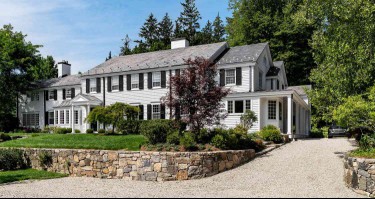
New England Colonial Revival-Style Home Facade
Design by Crisp Architects / Photo by Rob Karosis
Colonial-Revival houses like this New England home renovated by Crisp Architects are common in the Northeast region of the U.S..
Back Side of Colonial Revival-Style House Before Renovation
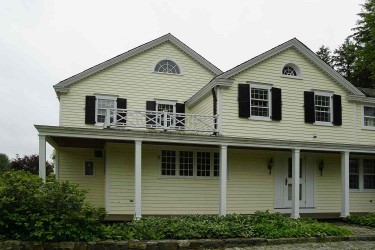
Design by Crisp Architects / Photo by Rob Karosis
The architects sought to make the Colonial Revival home more comfortable for modern lifestyles while preserving its character, such as the semi-circular fanlight windows high up near the roofline in this before photo of the back porch and entrance.
Back of Colonial-Revival Home After Renovation
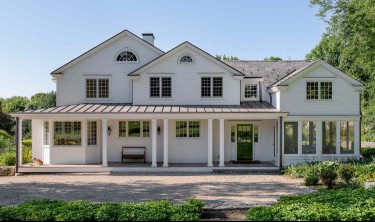
Design by Crisp Architects / Photo by Rob Karosis
Crisp Architects preserved the "great bones" of the original while raising the second floor ceilings, expanding the footprint, and renovating the interior. The white exterior paint color gives it a timeless look, and the black shutters were removed from the back side of the home for a more streamlined feel that sets it apart from the facade.
Front Entrance of Colonial-Revival Home
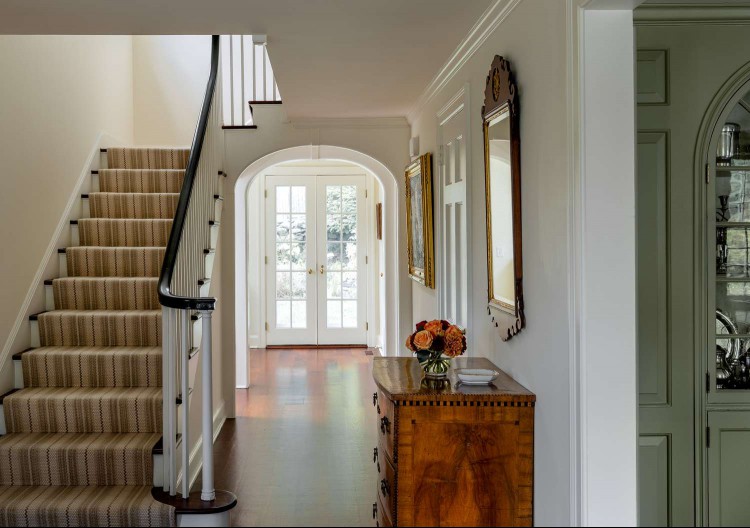
Design by Crisp Architects / Photo by Rob Karosis
The front entrance of the home features polished hardwood floors, an elegant staircase, and wall and doorway moldings for a timeless look.
Colonial-Revival Formal Dining Room
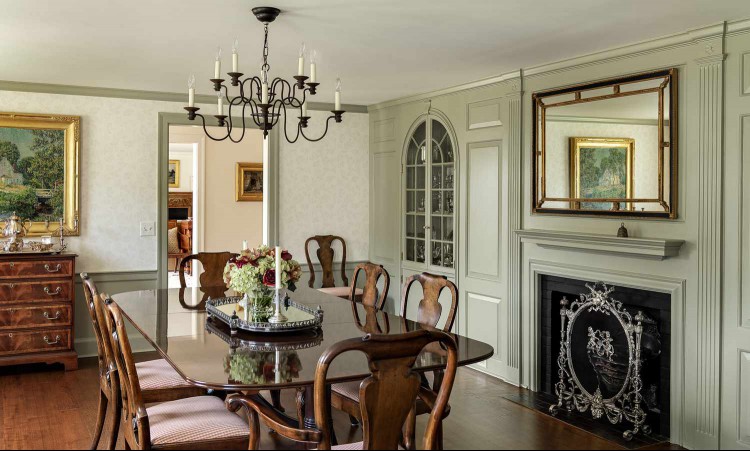
Design by Crisp Architects / Photo by Rob Karosis
The formal dining room features characteristic elements like wainscoting and a fireplace.
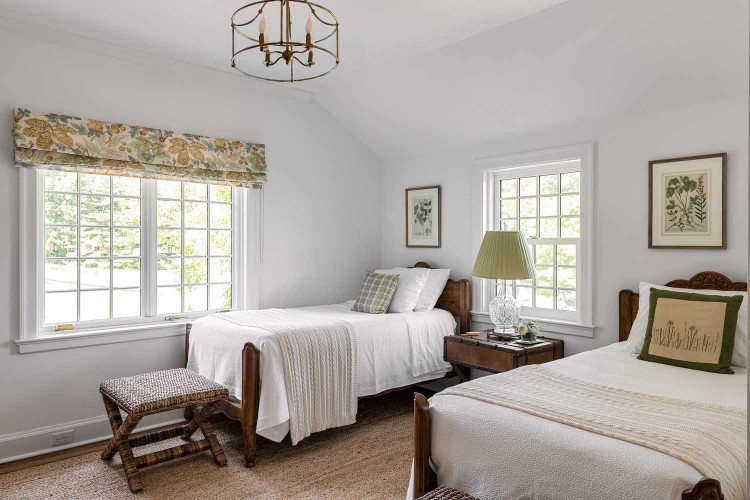
Renovated Colonial-Revival Bedroom
Design by Crisp Architects / Photo by Rob Karosis
An upstairs bedroom has white walls, classic windows, and is furnished with antiques that complement the traditional style of the home.
- What materials are used in Colonial-Revival architecture?
The most common materials for Colonial-Revival buildings are wood clapboard and brick.
What is an example of Colonial-Revival architecture?Many examples of Colonial-Revival homes exist in the Northeastern United States. One of the most famous examples of the Colonial-Revival style is the Woodrow Wilson House in Washington, D.C., designed in 1915.
When were Colonial-Revival houses popular?Colonial-Revival homes were most popular from 1880 to 1960.
What is Colonial-Revival interior design?The main features of Colonial-Revival interior design include grand entrances, polished wood floors, Oriental rugs, wainscoting, simple paint, wallpaper florals or stripes, chintz fabric patterns mixed with Queen Anne-style furniture, and Chippendale chairs.
Recommended Articles
 PAINTING
Painting Without Tape: How Cutting-In Can Save Taping
Easy-to-remove painter's tape has become the paint edging device of choice for most do-it-yourselfers because of its predictability and low-stick qualities. By contrast, painting without tape might se
SMALL-SPACES6 Designer Tips for Creating a Small Luxurious Patio You'll Love to Entertain In
Just because your patio space is on the smaller side doesn't mean that you can't turn it into a luxurious outdoor oasis. Here, we've spoken with interior designers who share some of their top tips for
INTERIOR-DECORATINGThe Outdated Home Decor You Should Throw Out While Spring Cleaning, Designers Say
Spring cleaning is about more than just donating clothes that no longer fit or parting ways with anything in your home that is stained or broken. It's also a great time to evaluate your home decor and
ROOM-DESIGN-AND-DECORATINGThis Unexpected Grout Color Is Better Than White for Subway Tile, Designers Say
When installing subway tile in your kitchen, there are a number of routes that you can go as it pertains to grout. While many people opt for a simple white, you may wish to think a bit outside the box
HOME-IMPROVEMENTElectrical Code Requirements by Room
The National Electrical Code (or NEC) is a document put in place to protect homeowners and residents from the dangers and risks posed by working with electrical connections. These residential electric
EXTERIOR-REMODEL-AND-REPAIRLearn the Rules for Overhead Clearance on Power Lines
Overhead power lines are subject to strict guidelines for minimum height clearances over streets, sidewalks, alleys, driveways, and other traffic areas. This is a safety consideration, aimed at keepin
BATHROOM-REMODEL-AND-REPAIRWhat a Sink Overflow Hole Is and How to Clean It
Bathroom sinks and some other fixtures include a sink overflow hole, or multiple holes, in the basin. This opening is either located near the top of the basin wall nearest to you or right under the fa
KITCHEN-REMODEL-AND-REPAIRKitchen Spacing Rules and Distances
A kitchen remodel is no small feat, and in the interest of trying to make things just a bit easier on yourself, you may be tempted to ignore spacing and placement recommendations for islands, seating,