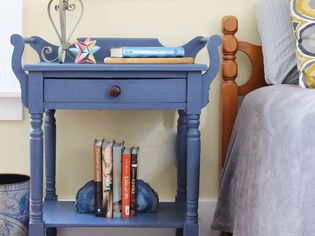
If you’re a fan of rustic farmhouse interiors, you’ve probably seen or heard of chalk paint before. This popular decorative paint is commonly used for refinishing furniture and home decor and is known for its matte, chalky finish.
Annie Sloan developed the original chalk paint formulation in 1990, but many other paint brands have adopted it since then. Here’s everything you need to know about this iconic decorative paint, including what it is, how it differs from regular paint, and what it’s best used for.
What Is Chalk Paint?
Chalk paint is a water-based polyacrylic varnish that can be used on various surfaces, including wood, glass, melamine, metal, and more. It has a matte, chalky finish (hence the name “chalk paint”) and requires very little, if any, prep work before application, making it ideal for the home DIYer. This type of paint should not be confused with chalkboard paint, a decorative paint that can be applied to walls, furniture, and more to create chalkboard surfaces for writing and drawing.
While it’s popular in various decorating styles, chalk paint has gained particular traction in the farmhouse and shabby chic decor styles since it can easily be given a rustic and distressed appearance using finishing waxes, sanding, and other techniques.
Since its introduction in 1990, chalk paint has completely revolutionized the world of upcycling furniture and completing DIY paint projects.
Chalk Paint vs. Other Kinds of Paint
This paint formulation is unique for several reasons. One of its most significant advantages is that chalk paint easily adheres to nearly any surface with no preparation required. Tedious tasks like sanding, priming, or stripping old paint/finishes can usually be skipped. Plus, since chalk paint can be used on various surfaces, one can of paint goes a long way and can be used for multiple projects—from refinishing cabinets to repainting patio furniture.
Chalk paint is also easy to distress, making it ideal for giving pieces some rustic, vintage charm. While other paints tend to crack or peel when sanded, chalk paint thins and wears away for a naturally aged look.
Important to note is that chalk paint does not come with a built-in sealer like many other kinds of paint. This means that it must be sealed using wax if you want to protect the finished piece. That said, you can skip sealing it if your project won’t be subjected to much daily wear and tear (such as a wall-mounted picture frame). Just be aware that chalk paint is more likely to fade and distress over time if left unsealed, especially if cleaned or handled frequently.
Chalk Paint Applications
This versatile paint can be used for many different projects and applications. It’s most commonly used to refinish old furniture and cabinets. Still, it can also give new life to home decor items, repaint patio furniture, apply lettering, paint walls, and much more.
Where to Buy Chalk Paint
While the original Chalk Paint® was developed by British designer Annie Sloan (and can be purchased online on her website), many different paint brands now offer their own formulations. This means chalk paint is widely available and easy to find online and at your local hardware store. Home Depot, Amazon, and Lowes all sell chalk paint.
- What are the disadvantages of chalk paint?
While it has many advantages, chalk paint also comes with a few disadvantages, depending on the type of project you’re working on. Since it has a matte finish, it may not be ideal for high-traffic areas, particularly ones prone to spills and messes (like kitchens or bathrooms).
Does chalk paint need to be sealed?Chalk paint has no built-in sealer, so it must be sealed to protect the finish. Wax is the most popular option for sealing chalk paint.
What happens if you don't wax chalk paint?If you choose not to wax chalk paint, it will be more susceptible to wear and tear over time, including damage from water and debris. This may not be a problem for decorative pieces, but for furniture that will receive a lot of daily wear and tear, sealing the paint with wax is the best way to protect the paint’s finish.
Recommended Articles
 HOME-DESIGN-STYLES
What Is Memphis Design?
Memphis Design is a striking postmodern style that began in the early 1980s with the innovative Memphis Design collective, led by renowned Italian designer Ettore Sottsass (1917-2007), and had an outs
ROOM-DESIGN-AND-DECORATINGConcrete Paver Review: Pros and Cons
Concrete pavers are a very popular building material used to pave driveways, walkways, patios, and other surfaces. Though they are often referred to as "cement pavers," that term is a bit misleading.
INTERIOR-REMODEL-AND-REPAIRReal Life Renovations: How to Upgrade Your Home Without the Hassle
Home renovations aren't always as simple as they seem on TV. They're notorious for showing the mostly glamorous parts of renovating—20 minutes of planning, building, sweating, and then boom, final rev
INTERIOR-REMODEL-AND-REPAIR5 Home Renovations That Just Aren't Worth Your Money This Year, According to Designers
The New Year is officially here, which means many homeowners are already eagerly planning the home projects and renovations they plan to complete this year. From kitchen upgrades to bath renovations t
HOME-IMPROVEMENTUnderstanding Electrical Wire Size Charts: Amperage and Wire Gauges
Whether you're installing, extending, or rewiring a circuit, finding out the wire gauge and amperage you will need is a key first step. The gauge—or size—of the wire used needs to match the circuit's
HOME-IMPROVEMENTFogged Window Repair Solutions
Commonly called thermal windows, insulated double- and triple-pane windows, officially known as IGUs (insulated glass units), offer far better energy efficiency than single-pane glass windows. Whether
EXTERIOR-REMODEL-AND-REPAIR8 Home Projects You Should Finish This Fall So You Don’t Pay for Pricey Repairs This Winter
Key Points Outdoor projects to prepare for the winter, like gutter or roof replacement.Heating upgrades, such as HVAC installation or fireplace replacement, should be done in the fall.Insulation, seal
BATHROOM-REMODEL-AND-REPAIREverything You Need to Know About Installing a Basement Bathroom
A basement bathroom is a great way to use the entire home efficiently. It can appeal to a homeowner who plans to continue living in the house and it is also attractive to a prospective buyer, typicall