Paint is challenging to remove from surfaces. With many methods available—scraping, stripping, sanding, and more—it's worth asking if you can use a steam cleaner to remove paint, as well.
Steaming isn't recommended for removing paint on most surfaces around the home. It can remove paint from metal, concrete, and brick, though other methods may work better.
Meet the Expert
- Anthony Kulikowski is a professional painter and the owner of Five Star Painting of South Bend.
- Ryan Parr is a painter and the CEO and founder of Nashville Painting Professionals.
Where to Avoid Using a Steam Cleaner
Anthony Kulikowski, a professional painter for nearly 30 years, says that steam is not used for stripping residential paint.
"I have never heard of anyone doing this or seen a situation where this would be a good idea," Kulikowski says. "In fact, it may cause damage to wood surfaces if not done properly."
Most surfaces around the home are poor candidates for stripping with a steam cleaner because the water will swell or degrade the materials.
Ryan Parr, a professional painter, agrees that steaming isn’t typically part of the process for removing paint. But he says that there are cases where it can be useful, such as softening old, stubborn paint layers, making it easier to scrape or lift off.
Want more home reno project tips and inspiration? Sign up for our free daily newsletter for the latest how-tos, reno guides, and more!
Siding
Plywood panels, wood shiplap, and cedar shakes are the most common types of siding materials that might be painted. All are made from organic materials and would be damaged by a steam cleaner.
Another popular type of siding material, fiber-cement or cement board, contains 90-percent inorganic materials. But the remaining 10-percent is made from cellulose (wood) fibers, which could be damaged by steam.
Interiors
Walls and ceilings are made of drywall and wood. Drywall is made of paper and compressed gypsum. All materials are either organic or highly porous, making them poor surfaces for stripping with a steamer.
Where to Strip Paint With a Steamer
Paint can be removed from metal, masonry, and other surfaces with a steam cleaner.
Tubs and Showers
Refinished bathtubs and showers are the only areas within the home that Kulikowski says might qualify as candidates for stripping with a steam cleaner.
Yet refinishing material is an epoxy coating, so it may be tough to remove with steam. Tub refinishers generally sand the surface to scuff it down or use liquid paint strippers.
Thick Paint on Trim
The best situation for using steam on wood, Parr says, is when dealing with very thick, built-up layers of paint that resist traditional stripping or scraping methods.
"It can be particularly useful for painted wood trim, baseboards, or cabinetry where you want to avoid using harsh chemicals that might damage the wood," Parr says.
Metal Siding and Roofs
Metal roofing or siding retroactively painted with latex paint may be stripped with a steam cleaner. However, the original, factory-applied paint is a baked-on powder coating that cannot be removed with steam.
Concrete
It's safe to remove paint from concrete with a steam cleaner. If you have paint on concrete pathways or pavers, first try removing it with a paint scraper, wire brush, or power washer before using steam.
Brick
Removing paint from brick with steam is generally safe, though it is best to try a chemical paint stripper first.
How to Use a Steam Cleaner to Strip Paint
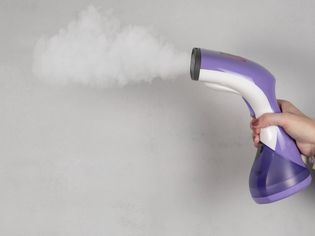
Most consumer-grade steam cleaners heat to around 212°F and work well for cleaning difficult debris on moisture-safe surfaces like tile. For paint removal, though, look for a commercial-grade pressurized steam cleaner.
Pressures on electrically powered commercial-grade units can exceed 180 psi, and temperatures surpass the boiling point (380°F). For pressures up to 1,300 psi, look for propane-powered commercial steam cleaners. As these machines cost over $6,000, search local rental yards for rental units.
Other Ways to Remove Paint
Given the difficulty of using a steam cleaner to remove paint and the possibility of damage, it's usually best to use other options:
- Scraper: Use a rigid putty knife or a painter's five-in-one scraping tool to remove loose paint.
- Heat gun: An electric heat gun softens and loosens the paint-to-surface bond, allowing you to scrape the paint more easily.
- Liquid stripper: The best paint strippers for safety are citrus-based, though they take longer to work than chemical-based strippers.
- Electric sander: If you can't lift off the paint, grind it away with a random orbital electric sander.
- What is the best cleaner to remove paint?
Acetone and paint thinner are two of the best cleaners for removing paint. Citrus-based liquid paint strippers also work well as they encapsulate the paint and prevent it from scattering—a problem when removing hazardous lead-based paint.
How do professionals remove paint?Professionals remove paint primarily with scraping and sanding. They may also use a pressure washer, heat tools like a heat gun, or liquid paint strippers.
How do you strip very old paint?Strip very old paint first by scraping it with a paint scraper. Old paint has often already begun to lift from the surface, making it easy to scrape by hand. Old paint may contain lead, which is hazardous to your health. A liquid paint stripper will work better for lead-based paint because the paint is embedded in the stripper; it does not become airborne, as with scraping or sanding.
Recommended Articles
 PAINTING
How Many Coats of Primer Do You Need?
Should you always prime before painting? If so, how many coats of primer do you need? There's no one answer because the number of coats of primer depends on a few factors, such as the color you're pai
HOME-DESIGN-STYLESWhat Is Toile Design?
A French word meaning "linen cloth" or "canvas," toile is a type of canvas-like fabric that has been a popular decorating element since the mid-1700s. The term "toile" can have a few different meaning
INTERIOR-DECORATING4 Questions to Ask Yourself When You're Thrifting for Home Decor
I've been thrifting as long as I can remember, especially when it comes to sourcing fun and unique items for my home. It's always been exciting to go through various shelves to see what treasures I ca
ROOM-DESIGN-AND-DECORATING7 Designer-Approved Decorating Tips for Small Kitchens That Actually Work
Key Points Maximize small kitchens with vertical storage, dual-purpose decor, and cozy details like a vintage rug.Keep dishware simple in color, invest in standout features, and prioritize natural lig
INTERIOR-REMODEL-AND-REPAIR8 Popular DIY Projects That Can Decrease Your Home's Value, a Real Estate Agent Says
Tackling DIY home improvement projects can make your home look better, be more functional, and can even increase the value of the home, making it a better investment for when you eventually sell. Howe
HOME-IMPROVEMENTLaminate Underlayment: Installation Basics
Underlayment is necessary for laminate floors because it smooths uneven surfaces, absorbs sound, and controls moisture. Learn about underlayment for laminate flooring and installation basics. What Is
EXTERIOR-REMODEL-AND-REPAIRHouse Bump-Out Additions and How They Can Add Space
Few homeowners will ever say that they want less space. Once you live in a house for a while, the house always seems to get smaller with the constant accrual of furniture, pets, people, and belongings
KITCHEN-REMODEL-AND-REPAIR5 Things You Should Never Forget When Renovating a Kitchen, According to Pros
With peak hosting season just around the corner, many are looking to change up their spaces. And while renovating can be extremely fun, it's also hard work—especially for kitchen spaces. Kitchens can